
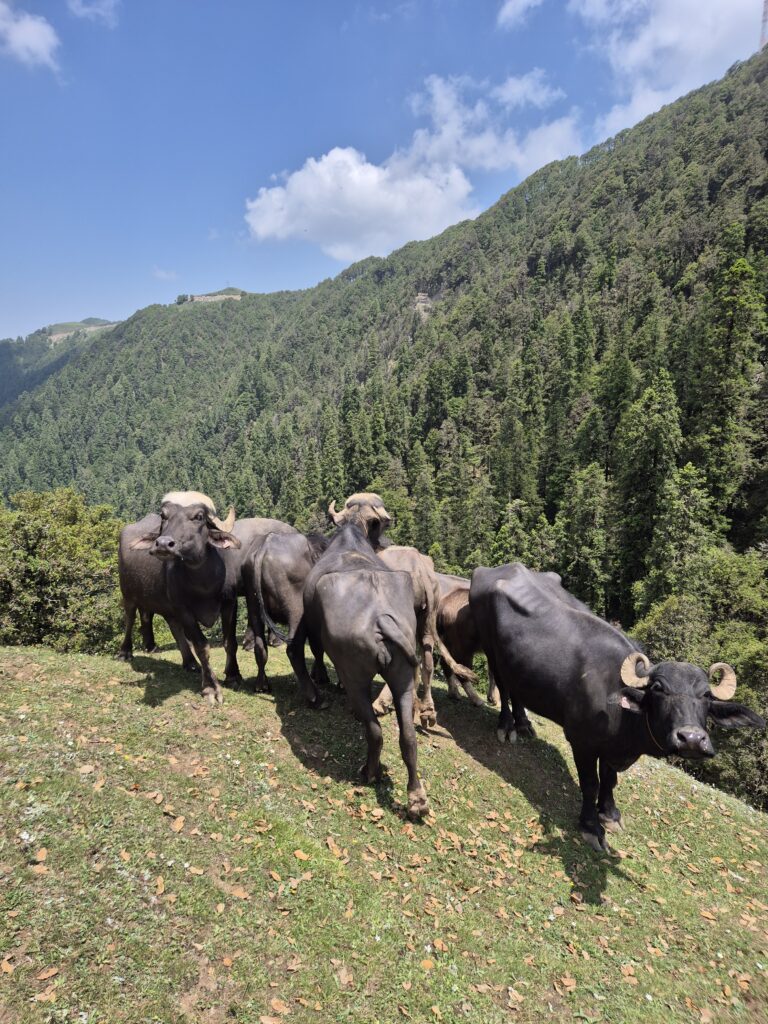
"Bhains hai to Gujjar* hai!" (Gujjar exist only if the Buffalo exists)
- a Ghumantu Gujjar
It is five-thirty on a winter morning somewhere in the foothills of Himachal Pradesh. It’s still foggy, and the only sounds that can be heard are of the forest birds chirping. Shakeena# is already out of bed, has lit firewood to warm herself up, and prepared chai for herself, her daughter-in-law, and her son, ready to start the day. They pick a pateela each, and walk to different corners of open grassland where their buffaloes live. Shakeena’s son Sattar# whistles to a buffalo, who comes walking towards him. Among the three of them, it’s going to take an easy forty minutes to finish milking all the 12 buffaloes, and collect it in two large cans for the vendor, who’ll be here on his bike by seven.
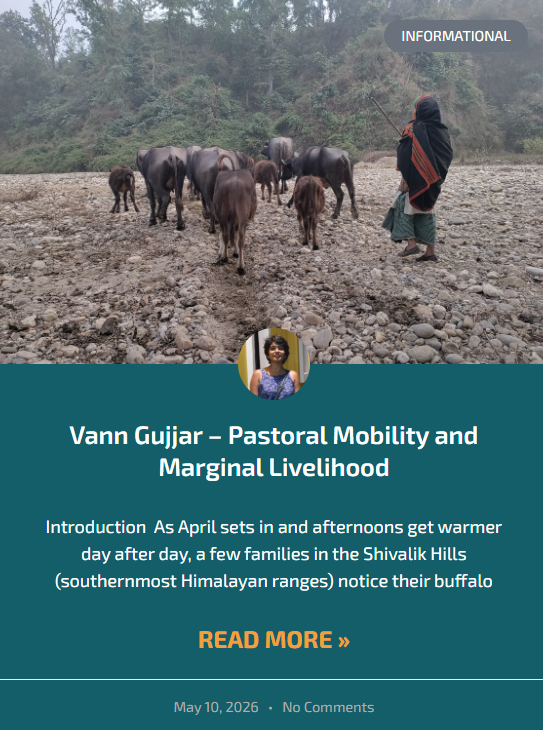
The Gujjars produce large volumes of buffalo milk that meets the nutritional security of local households. | Video credit: Ankita Marwaha
Shakeena saves one pateela brimming with the white, frothy milk, and takes it to the kitchen. The buffaloes are now hungry and restless to go into the forest. Shakeena and Sattar quickly spread dry paddy grass for a few, while the buffaloes they just milked leave for the forest with Sattar. By seven, Shakeena’s husband is awake. By the time his daughter-in-law Roobina# makes chai, he would be ready with his paarthi for a new day of adventure. The previous day, he spotted a few heavily-leafed Kanju (Indian Elm) trees that are his buffaloes’ favourite. They give thicker milk after eating Kanju leaves. Right after serving tea, Roobina moves her seat to the kitchen corner, next to the wooden madani. She adds some milk from Shakeena’s pateela, and starts churning it to make butter and then ghee for the family.
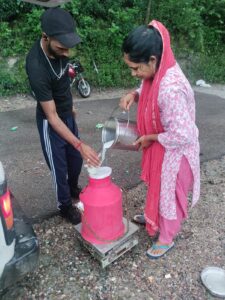
A bike’s engine sputters from a distant echo. It’s a sign for Sattar to start walking towards the milk cans. Sattar ties the cans to either side of the milkman’s bike after a small chat, before it drives on. The two cans, approximately 65 litres in total, will join fifteen other cans, all of which will go to a dairy-and-sweet shop in the Paunta Sahib city just five kilometres away. These cans join the informal dairy sector that forms approximately 60% of India’s dairy economy that meets the nutritional security of Indian households.
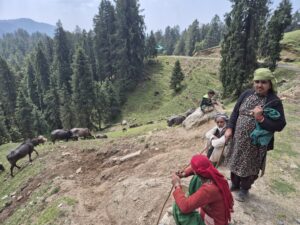
The Gujjars are a semi-nomadic ethnic group that move between the alpine meadows in summers and Himalayan foothills in winters. | Photo credit: Ankita Marwaha
Dairy: A Practice or A Sector In India?
India is currently the largest milk producer in the world, producing one-quarter of the world’s milk. This production is absorbed by the cultural landscape where milk is not just a food, but an indispensable source of nutrition for kids who must drink one glass of milk a day to stay ‘Taller, Stronger, Sharper’. Even for the elderly, especially among vegetarian households, milk remains an essential source of protein and calcium, and the ‘Taste of India’. Milk also has religious connotations where milk and its products such as ghee are used in rituals in many households, the cow is considered holy, worshipped as goddess, while the bull is the vehicle of Lord Shiva.
Almost 20-25% of this milk comes from the formal sector of large dairy cooperatives, dairy marketing companies, and export businesses (close to 1%).
But the local sweet shops, the kulfi thelas during summers, new mothers looking for ‘fresh’ cow milk for their growing kids, and tea stalls in every gali where people gather for an evening chat after work — they all live by the milk that comes through local dudhiyas, or milkmen, who aggregate milk produced by rural households and pastoralists on bikes and vans.This informal network forms the remaining majority of the dairy sector in India that does not enter official statistics. A large part of this network is formed by families such as Shakeena’s — i.e. the pastoralists.These households contribute Rs 97,000 crores annually to the national economy, manage 40% of India’s livestock genetic pool that is resilient to local climate and diseases, and sustain the health of grazing grasslands and forested ecosystems that are rich carbon sinks.
Yet, the term ‘pastoralist’ has rarely made it to any official statistics, financial report, economic studies, or policy documents.
Only in the last few years, particularly with the Livestock Census held in 2024-25, the government has recognised ‘pastoralists’ as a distinct category to be included in official statistics and policymaking. State governments of Jammu and Kashmir, Himachal Pradesh, and Karnataka are one of the first few to announce schemes particularly for pastoralists. These changes are further enabled by the ongoing International Year of Rangelands and Pastoralists 2026 that has initiated a global movement to raise awareness towards pastoralism’s ecological and economic contribution.
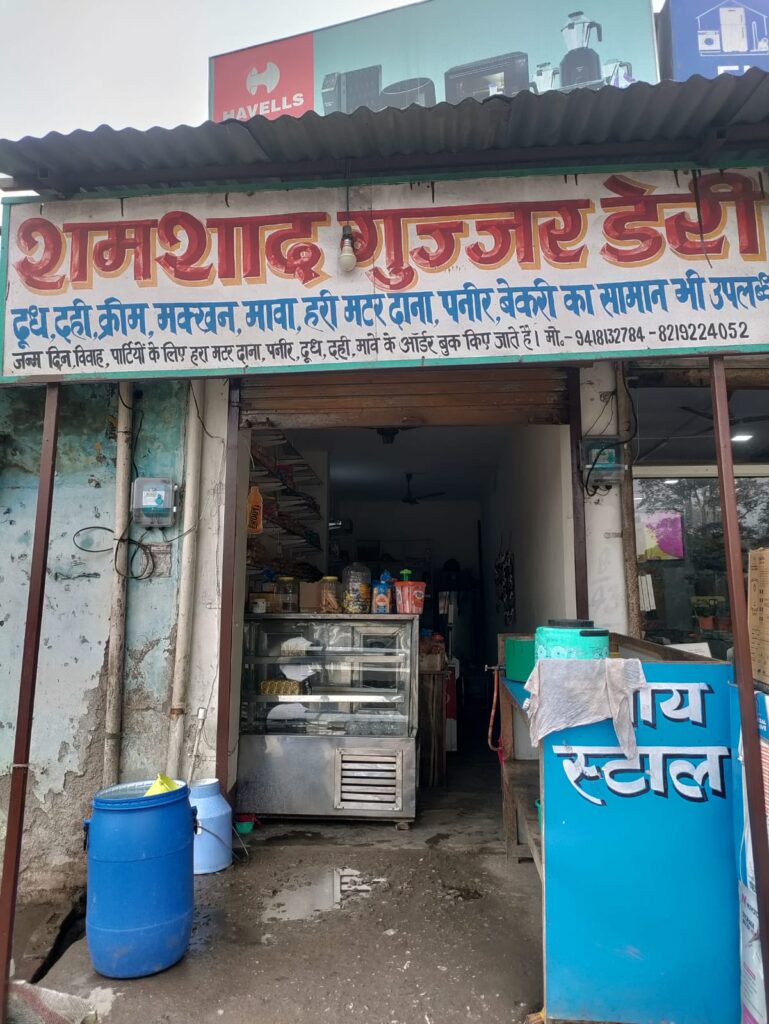
Ever since the White Revolution in India in 1970, the government has initiated many schemes to boost a national-level milk grid that efficiently transports perishable milk across thousands of kilometres, from rural households to houses in densely-populated cities, through a highly synchronised and temperature-controlled cold chain network.
India’s rise from a milk-deficient nation to the world’s largest milk producer began in 1965 — when the National Dairy Development Board (NDDB) was set up under the chairmanship of Dr. Verghese Kurien to replicate the successful dairy-collection model in Anand (Gujarat) across the country. This was the AMUL cooperative model, founded in 1946 as the Kaira District Co-operative Milk Producers’ Union Limited to remove middlemen from the dairy chain. The setup aggregated milk directly from farmers at village-level to transport to cities. The expansion of this model by Kurien led to what we now know as the White Revolution across the 1970s and 80s. Today, along with the NDDB, government initiatives including the Rashtriya Gokul Mission, State Cooperative Dairy Federations, National Programme for Dairy Development (NPDD), and Dairy Entrepreneurship Development Scheme (DEDS) are supporting rural households in India by providing credit, cattle, and easy market access at good Minimum Support Price (MSP).
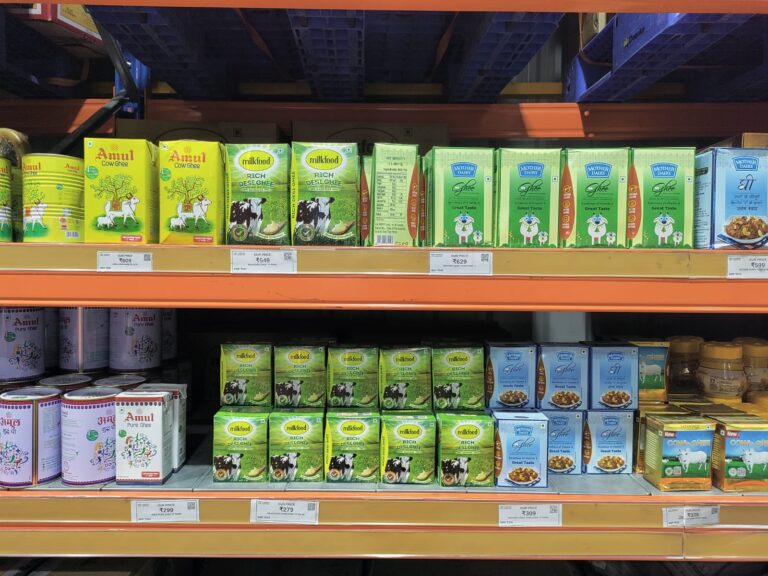
The expansion of the cooperative model by Dr. Verghese Kurien led to what we know today as the White Revolution. | Photo credit: Ankita Marwaha
The dairy produced by pastoral groups is beyond an economic activity. It is a practice that meets the three essential goals of the 2030 Global Agenda for Sustainable Development:
- Core Livelihood and Food Security Goals (SDG 1,2)
- Ecosystem Goals (SDG 12, 13, 15)
- Socio-Economic Goals (SDG 5, 8, 10, 16)



As a livestock-rearing system whose sustenance is relevant for the health of grasslands, continuity of adaptive breeds, and dairy economy, how is it possible that the largest milk-producing pastoral households of the country got left out after 50 years of a village-level revolutionary movement with support from the government?
Milk, Milk Everywhere, But Not A Pastoralist In Sight
Most governance systems and policy schemes are fundamentally designed for sedentary households. The same is true in the dairy sector. The cooperative aggregation model was designed for village-based smallholders who are within easy access to the collection centre. To create a steady supply that has a reach across all corners of a country, the model requires a fixed, predictable infrastructure that could run on a highly efficient cold chain. The milk van of a particular collection centre runs on a fixed route every day to collect milk at the same time every day.
"The contemporary cooperative collection model is incompatible with pastoral mobility."
Unlike sedentary households and their milk vans, pastoralists move according to the rhythms of nature. The Ghumantu Gujjars of Himachal Pradesh and Van Gujjars of Uttarakhand are a semi-nomadic ethnic group that move between the alpine meadows in summers and foothills in winters. The contemporary cooperative collection model is incompatible with pastoral mobility. A cooperative’s collection centre may find it challenging to follow pastoral herds living in forests or on village fringes that migrate 150 kilometres away. With government infrastructures having no mechanism for people in seasonal mobility, entitlement rights, welfare schemes, veterinary services, and cattle subsidies implemented through village-level centres almost never reach the pastoralists during migration, including the Gujjars, many of whom live in seasonal homesteads outside of revenue villages. Till today, many Van Gujjar pastoral homesteads in Uttarakhand are not a part of any panchayat or revenue village. Despite being a forest-dwelling ethnic group, their social status as a non-ST within Uttarakhand makes it challenging for them to prove their traditional access and reclaim grazing rights. However, in the case of Himachal Pradesh and Jammu & Kashmir, the Gujjars’ recognition as STs encourages affirmative action for legal protection and livelihood support.
With government infrastructures having no mechanism for people in seasonal mobility, the Gujjars find it challenging to avail welfare schemes, services, and subsidies implemented through village-level centres, during migration season. Location: Shikari Devi peak | Video credit: Ankita Marwaha
However, it is important to point out the case of Gujarat which is an exception in this claim. Multiple studies indicate that the Maldharis and pastoralists of Kachchh, Saurashtra, and Gir forests contribute approximately 53% of Gujarat’s total milk supply, acting as indispensable suppliers that led to the success of the Gujarat dairy cooperative economy. But across many other states and landscapes, the involvement of the pastoralists in the formal sector do not look the same.
Secondly, the centre of the White Revolution was high milk output. The movement introduced high-yielding exotic breeds (like Holstein-Friesian and Jersey) in the Indian landscape and promoted their cross-breeding with local cattle to maximise daily household-level output. These breeds required higher maintenance cost due to intensive veterinary care and infrastructure to protect them from harsh climate. This neglected the indigenous genetic diversity that pastoralists have managed for generations in the same landscape because of the breed’s adaptability to the local terrain and climate.
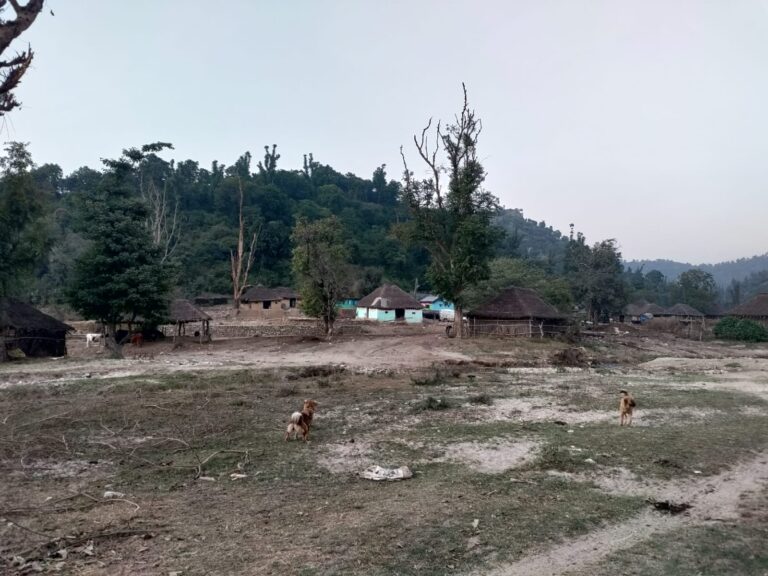
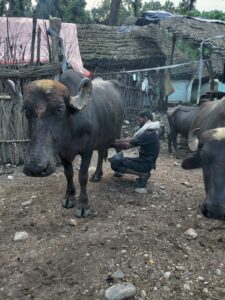
The ability of the Gojri water buffalo to walk freely over longer distances and high altitudes, to graze on the local grasses made livestock keeping a cost-effective practice for the Gujjars, as compared to the cost-intensive infrastructure and health management strategies that farmers managing exotic breeds have to partake in. It is important to note that it is only the bred Gojri buffalos which are adapted to traversing slopes and high mountains due to their evolved physiology and light frame. Whereas heavier breeds such as Murrah and Kutchi buffaloes are not known to be able to traverse landscapes with such ease. This makes the Gojri a unique breed, globally. The fact that the breed’s name is derived from the native language of the Gujjar community – Gojri goes on to show the Gujjar community’s distinct breed adaptability to suit the landscapes it inhabits. Nevertheless, the Gujjars moving with their indigenous Gojri buffaloes remain undervalued and underrecognised even today.
Pastoralism As A Resilient System
As one of the oldest livelihoods in the history of human civilization, pastoralism survives and thrives till today despite its underrepresentation in the current governance system and public imagination. Out of all livestock populations currently managed in India, approximately 77% are kept in extensive systems — i.e. they are either herded or left for free-ranging on common grazing lands. These livestock produce about 53% of India’s milk and 74% of its meat. This indicates the significance of pastoral systems across the Indian rural economy. Especially in challenging terrains such as the cold desert of Ladakh, the rough snowy caps of Sikkim, drought-prone Deccan plateau, the arid grasslands of Kachchh, and the Thar desert, pastoralists continue to play a significant role in economic and cultural activities by best utilising these ecosystems for nutrition and livelihood. Pastoralists produce dairy, leather, wool, and resilient livestock breeds, all of which are sold in local markets for nutrition or everyday use. Pastoral livestock are used as transportation even now in terrains strenuous for four-wheelers and two-wheelers.
An economic and policy intervention supporting pastoral systems can carry solutions that produce high-quality and cost-effective dairy that is adaptive to climate change, while remaining rooted in ecology. | Video credit: Ankita Marwaha
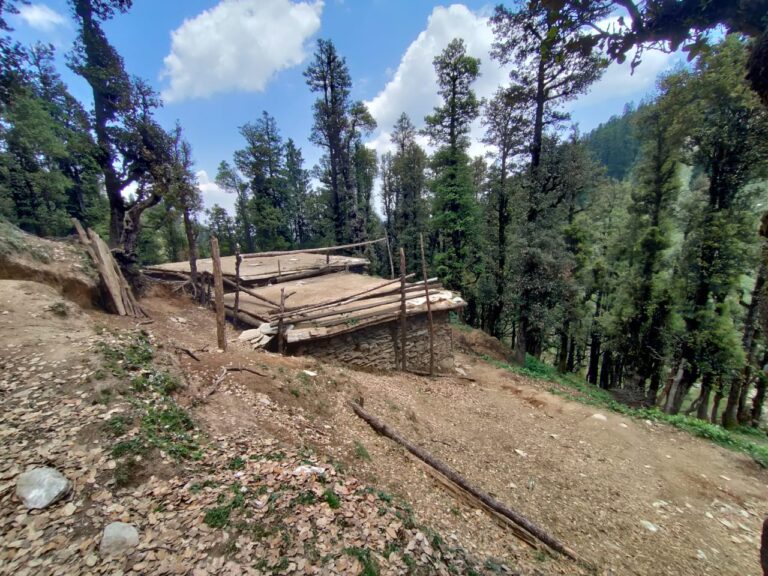
The nomadic Gojri buffaloes kept by the Gujjars fulfil the nutritional security of the local populations living in the Shiwalik floodplains and alpine meadows. During winters, these herds stay in lower hills and are in the vicinity of village markets and small cities. “We sell our milk to the local dhabas in Karsog town on our bike twice a day (morning and evening),” says Kasham#, a Ghumantu Gujjar from Karsog, Mandi district. The dhabas buy his herd’s milk at Rs 50/kg, and pay him via cash or bank transfer once every 10-15 days. Like Kasham, many Gujjars sell their milk to local dairy shops, mithai (sweets) shops, and even directly to households. However, this value chain doesn’t work during summers, when Kasham takes his buffaloes to the vast meadows of Shikari Devi peak. His buffaloes graze above 3100m altitude, an-hour-and-half uphill drive from Karsog. “No dairy van in nearby towns comes till here to collect our milk,” he says.
When transporting their perishable milk to the markets becomes infeasible (logistically or economically), the Gujjars can be relied on for their adaptive strategy. “We make khoya with our milk,” Kasham refers to the practice of heating milk for hours to remove its moisture content. This increases the shelf-life of the milk and turns it into khoya (Milk solids used for making sweets). “Once in every 7-8 days, my son gets his vehicle or takes the bus from Shikari to sell our khoya in the dhabas or dairy shops in Karsog,” Kasham explains. This seasonal flexibility is unique to the Gujjars in this landscape, as they adapt to the logistic and seasonal variability of their market chain while utilising the value of their unique milk. The buffalo milk, especially during summer grazing, is rich in fat content, making it ideal for sweets and ghee. This practice sustains them throughout summers and monsoon, before it is time to descend to the foothills. Such examples of adaptability of the pastoral system can be seen in every part of the Gujjar’s practice. Mobility, the central feature of pastoralism, is not a rigid choice but an ecological response, further shaped by political and social contexts.
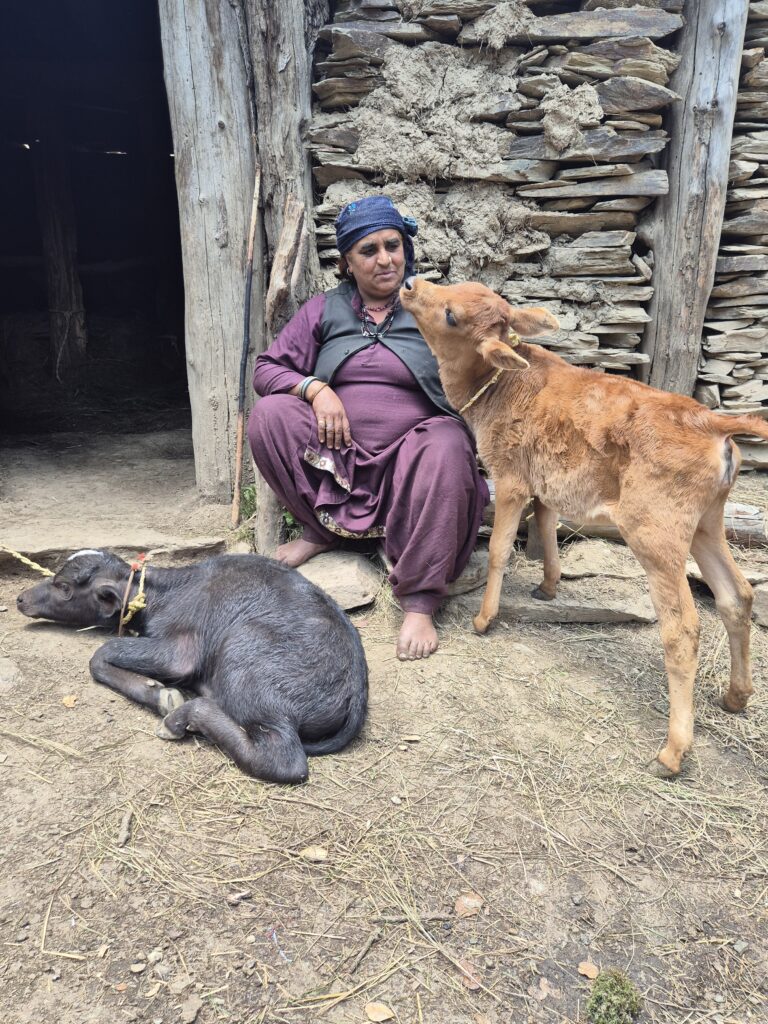
The time and route of their movement come to be because of their knowledge of the buffaloes’ behaviour, seasonal availability of water and fodder grasses eaten by the buffaloes, and agricultural cycles, all learnt and passed down through generations. In Himachal Pradesh, as highways, agricultural lands, and fenced forestlands started disrupting the traditional routes of the Gujjars. The shrinking of available grazing lands has also led to community conflicts. To mitigate this, the Gujjars are adapting new practices. Alamdeen#, a Ghumantu Gujjar from Paunta Sahib division, Sirmour, had been taking his buffaloes on long migration in the summers to the high-altitude meadows of Churdhar for at least two generations, that is until a few years ago.
With restriction on some meadows creating grazing pressure on the rest, he shifted his migration pattern: instead of going uphill from Paunta in summers, his herds stay in Paunta during summers, and go for short migration during winters to the foothills of Yamunanagar in Haryana, where there is good forage and water availability.
In another instance, Rafiq# from Tehri Garhwal, Uttarakhand, shifted his winter homestead this year due to drying up of water sources near his earlier homestead. Due to the changing biodiversity of the forests after the entry of invasives, many Gujjars have prudently adapted their fodder management to include agricultural fodder such as praali (paddy grass) from February to April. They also buy khal (oil cakes) and chokhar (wheat bran) as supplements particularly for milch buffaloes.
The resilience that a pastoralist embodies in their practice comes from their freedom to move, with an ecological awareness of their surroundings. Unlike other practices such as farming, which rely on controlling the environment and soil based on one’s own needs, a pastoralist adapts to the changing environment. These features are why pastoralism thrives in today’s economic and ecological reality.
Extensive research on pastoral-based animal husbandry points towards how a restriction-free pastoral system offsets a large amount of rearing cost as compared to stall-fed systems in villages. Intuitively, this also implies that enteric methane emission contributing to carbon cycles in the environment by the pastoralists, if any, are also mitigated due to slow and spatial disbursals as compared to Stall-fed and industrial Milch production systems.
It is also the case that grazing lands are known to sequester 200-500kg of carbon per hectare per year, so these considerations of sustainability are also important when creating impact for pastoral communities.
With the White Revolution, India has become milk-abundant, and has deified milk as a notable symbol in its cultural meaning-making. But the milk economy has been coagulating in recent years. There has been a rise in the dairy adulteration cases, fodder prices due to climate change, and instances of heat stress among cross-bred cattle. An economic and policy intervention supporting pastoral systems can carry solutions that produce high-quality and cost-effective dairy that is adaptive to climate change, while remaining rooted in ecology.
The important contribution of the Pastoral communities in the success of the White Revolution, particularly in the model state of Gujarat, is often overlooked. Going forward it is important that these very communities develop a distinct identity of their own rather than have their produce mixed and generalised in the contemporary market economy. But what can this economy look like? How can the Ghumantu Gujjars receive fair prices in a cost-first market biased towards sedentary systems? The articles that follow will deep-dive into the existing market linkages of a Ghumantu Gujjar cluster in Sirmour and Mandi districts (of Himachal Pradesh) to examine if evaluation tools used in sustainable food systems to help farmers achieve fair or rather ‘True’ price and differentiated value chain can for support pastoral groups in recognising their sustainable practices in policy-friendly formats for governments to adapt. One such innovative framework, by Gram Disha Trust planned, is the Certified Evaluation Tool for Agro-pastoral Resource Analysis-Pastoral Mobility (CETARA-PM) inspired from the already existing tool (called CETARA-Natural Farming) under the Natural Farming Yojana by the Department of Agriculture, Himachal Pradesh.
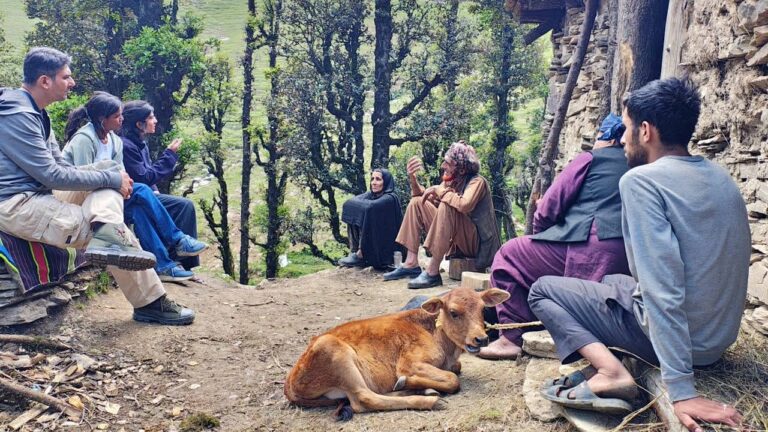
The evaluation tool shall be able to recognise the sustainability value of Shakeena’s traditional knowledge of the native grasses and leaves that her buffaloes love while also storing feed for tough times, Alam’s resilience in adopting a migration route based on local conditions, and Kasham’s market adaptability according to seasons. This is essential so that when integrated with economic and policy infrastructure, the tool can enable the Gujjars, or any pastoralist, to raise their Gojri buffaloes with dignity and earn a livelihood through fair or rather ‘True’ pricing.
*The term ‘Gujjar’ refers to the nomadic ethnic group, many of whom continue to reside in and depend on forests across Jammu & Kashmir, Himachal Pradesh, Uttarakhand, Uttar Pradesh, and Punjab. The term has been used in the article when referring to the community members at large who still continue pastoralism. However, it is important to note that the Gujjars in Uttarakhand self-identify as ‘Van Gujjars’ (literally meaning ‘forest’ Gujjars) as they continue to demand for their recognition as Scheduled Tribes. Meanwhile, the Gujjars in Himachal Pradesh self-identify as ‘Ghumantu Gujjars’ (literally meaning ‘nomadic’ Gujjars). The two terms have been used when categorically referring to the community in the two states.
#names have been changed to protect individual identities