
Regenerative Agriculture in the Green Revolution heartland
Growing up amid climate anxiety, I have also dealt with health issues in the past. A year ago, regenerative farming appeared to be the only solution I could imagine.
Experts say the agriculture sector and allied activities are the second-largest greenhouse gas emitter. Growing up in the Green Revolution heartland of India, chemical-intensive farming and sugarcane mono-cultures are common. I wonder if we can grow food profitably and ecologically. Therefore, we began a quest alongside pioneering individuals and communities working on the ground. They not only understand the systemic flaws in conventional farming but actively guide a transition to just food systems. These are guided by regenerative principles and agroecology.

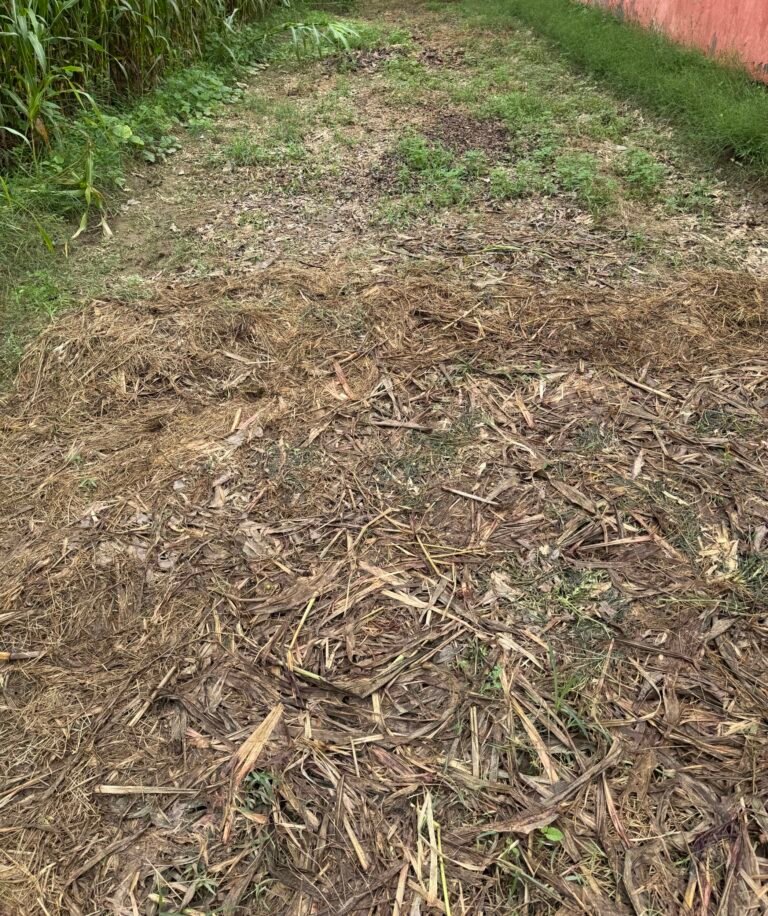
Two pictures from July 2025 show a contrast. The left image shows the farm area regularly tilled. The right image shows soil not tilled in months after a heavy downpour of over 30 hours.
Prior to the monsoon, I sought to protect this experimental patch. The aim was to prevent erosion of the fertile topsoil, avoid compaction, and maintain soil structure. Therefore, I applied FYM (farmyard manure) to boost microbial activity and added organic mulch as a protective blanket.
In September, I dug the first pair of raised beds.
While the digging happened, the main observation were the earthworm tunnels indicating a thriving population of deep dwelling earthworms.
As the crops began germinating and thriving, most of the greens were under attack by a pest, most probably porcupines.
Because I was new to this, my delayed response created a positive feedback-loop. The frequency of damage came down from once in 10-12 days to every 4-5 days. Unknowingly, I had trained the animal pest to consider this vegetable patch as its primary source of food. Upon close observation, I noticed no other crops growing on the farm or in nearby orchards. This left the vegetable seedlings as a buffet for the pests.
Eventually, I had to go for fencing, which is the first unavoidable investment to begin farming ecologically. Can a country with 86% of it’s farmers owning less than 2 hectares of land afford this investment?
Challenges
The main challenges in growing crops without agrochemicals and industrial mechanisation are –
- Irrigation method
- Weeds
- Labour input
- Managing surplus produce
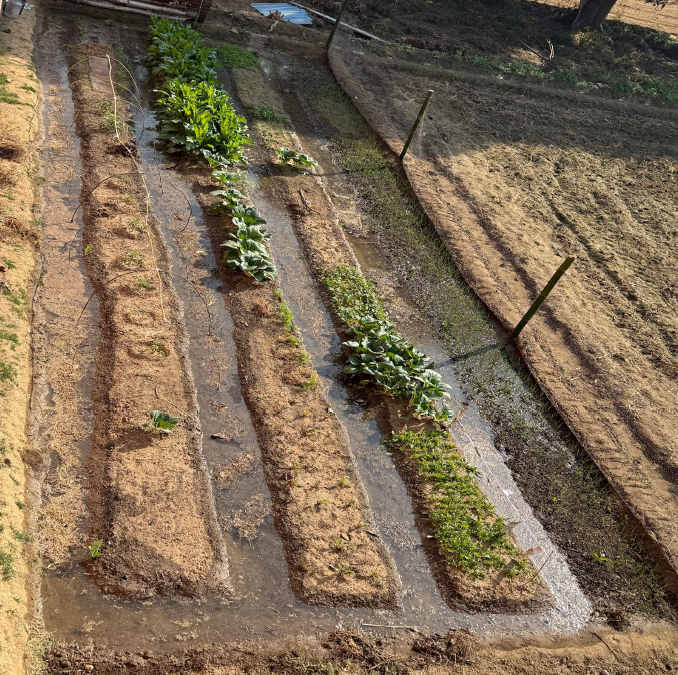
In natural farming, drip-lines or sprinklers are the usual choice. With limited cash, I evaluated options suitable for a small Indian farmer who cannot afford technology-heavy methods. I chose a furrow-irrigated raised bed system: one-foot-wide furrows flood and water seeps laterally, lowering top-water application and reducing bed weeds.
Hand weeding is physically demanding and back-breaking work, usually undertaken by women.
The ergonomic design of the 8 inches high raised beds did provide significant relief from the back-bending work of pulling out weeds, but there is a critical need for women-centric ergonomic mechanical tools that are within the affordable range of the majority of Indian small-scale farmers.
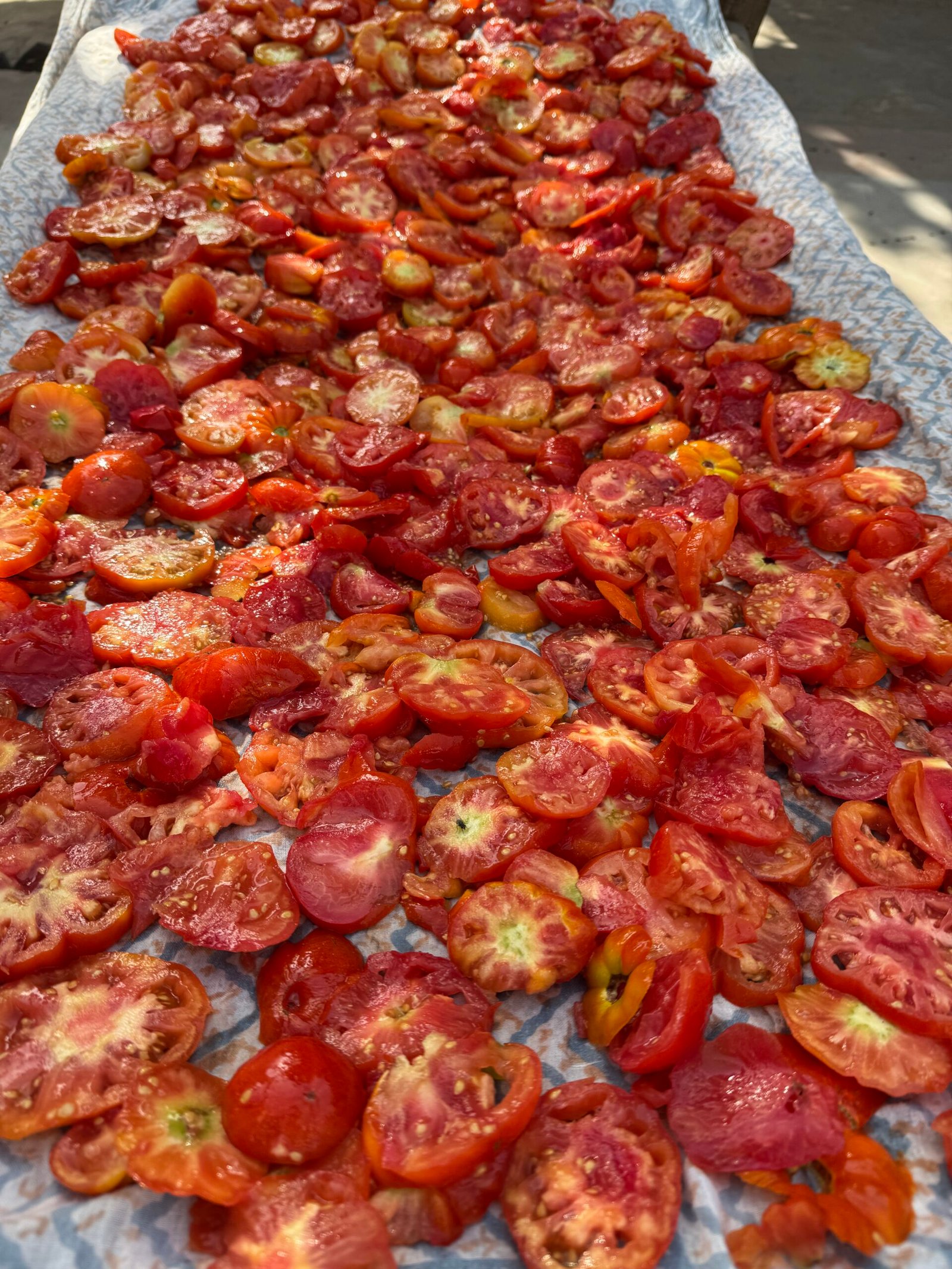
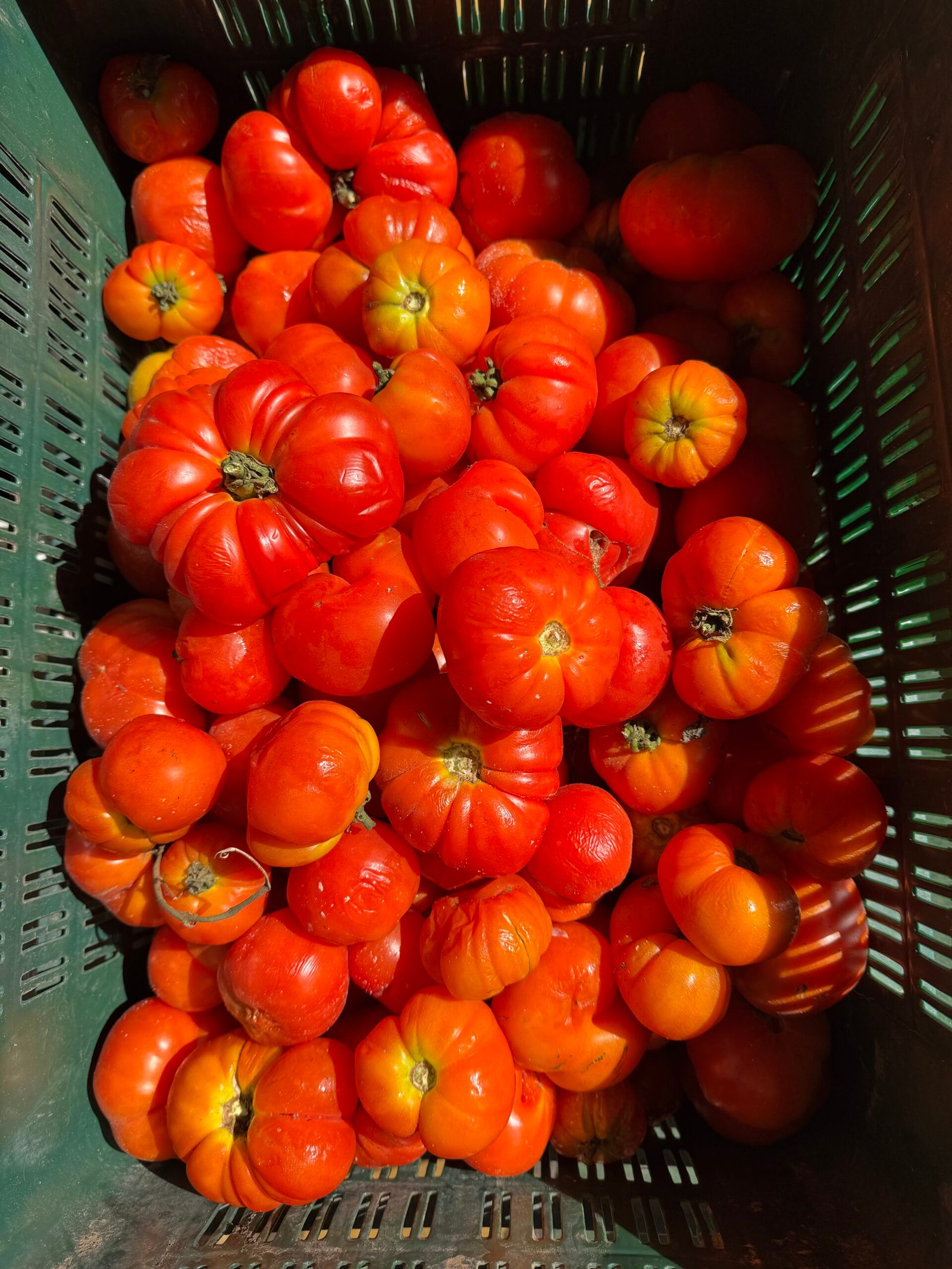
We had abundant harvest of Beefsteak Tomatoes in April, 2025. The surplus produce was puréed and refrigerated. We also tried drying, but due to lack of skills and proper knowledge of the techniques of dehydration and the suitable varieties, the mold spoiled the batch.
This prompted me to think about the macro-level gap in storage facilities and how this loss of produce and income is a norm for a smallholder, every cropping season.
Inadvertently, natural farming shifts the burden of tasks like mechanical weeding and input preparation onto women.
The goal of agroecology cannot merely be “chemical-free food” for urbanites. It must design women-centric ergonomic tools, sorting stations and equitable labour sharing. Thus, it should be remunerative considering this Social Sustainability based lived-reality.
Need to save seeds?
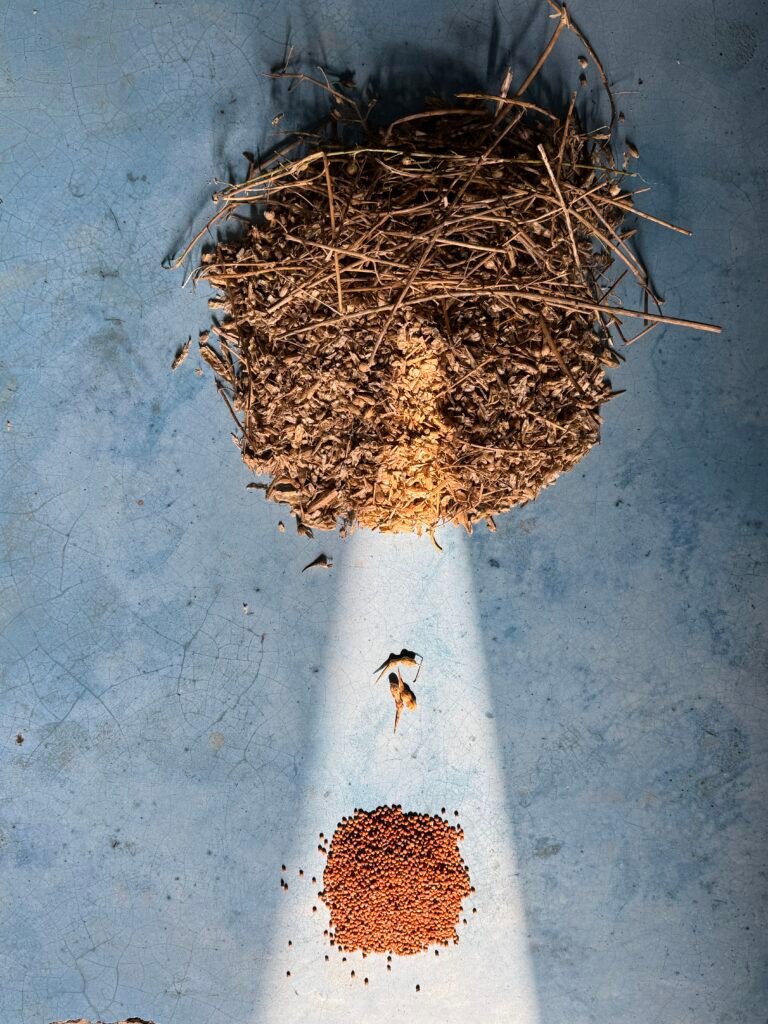
Finding native seeds in a region with deep penetration of HYVs and mono-cultures is like trying to look for a needle in a haystack. I am buying most of the seeds from farmer cooperatives in southern states who ship pan-India. It came with its own kind of issues. For example, delayed shipment means jeopardised sowing window, seeds running out of stock, germination failure means waiting for another two weeks to receive a replacement, and most importantly it burns a hole in your pocket. I ended up spending ₹3,000 on just buying native and heirloom seeds, in a year, to grow food for personal consumption. So, I started saving seeds from the first season itself, out of necessity.
True Price Discovery

The journey began from looking at agriculture purely from the ecological standpoint. A year into managing three raised beds and the produce from them, I have realised that there is a missing half of Soil Regeneration – MoolyaSHIKHAR.
Good soil biology alone does not save a farmer if the market treats their produce as an undifferentiated, cheap commodity. The market favors homogeneous produce which a natural farmer can never achieve. To fix this gap, social enterprises can step in as ‘Transparent Intermediaries’.
And rightly so, the #MoolyaSHIKHAR methodology gives preference to Grade B and C produce that farmers grow with minimal or no chemical inputs, but farmers still struggle to fetch the correct price for the best quality they produce.
Unlike peri-urban farmers, hill farmers face severe market access constraints, and high transportation costs exacerbate these constraints. That requires radical traceability so consumers know who grows their food and the practices used, and 60–70% of payments flow back to the producer, giving hill farmers the stability to farm sustainably.
I have had the privilege of family land to experiment, make mistakes, and lose the surplus produce to mold while attempting to dehydrate tomatoes for storage, but and Indian smallholder surviving on daily cash flows cannot afford unmitigated risk without a safety net.
Agroecological transformation does not demand an overnight reversal of cropping systems. Instead, it warrants a practical framework by which the primary producers can stabilise their incomes and net returns first, enabling them to transition steadily.
My Hopeful Contributions
Taking the approach in phased manner, I see my contribution divided in three phases –
Phase I November & December –
I will begin by familiarising myself with the socio-cultural fabric of the region and trying to integrate into the community through Ethnographic listening. The trust building has to be mutual so that I am not considered as an outsider who is there to tell farmers ‘how to farm’. Instead, Co-creation of Knowledge, which is one of the principles of agroecology is actively implemented. Then we can proceed with the preparation of activity chart with Gram Disha Trust for the upcoming months.
Phase II January & February –
This phase will include both on-farm and off-farm activities. From learning and practicing training and pruning of orchard fruit trees with the farmers, to coordinating with women SHG and co-designing ergonomics, will be core part of the phase. Tools and equipment in agriculture are designed assuming men to be the main operators. Therefore, starting from the SHG and keeping women at the centre of designing grading and sorting stations, providing seating units with lower back support, rotating tasks to reduce the physical strain and enhance productivity, so that women don’t have to compromise on their responsibilities back at home.
- Maintaining daily stock ledger and Profit and Loss (P&L) for the business of the local farmers shop – ‘Pangne Ri Khitti’.
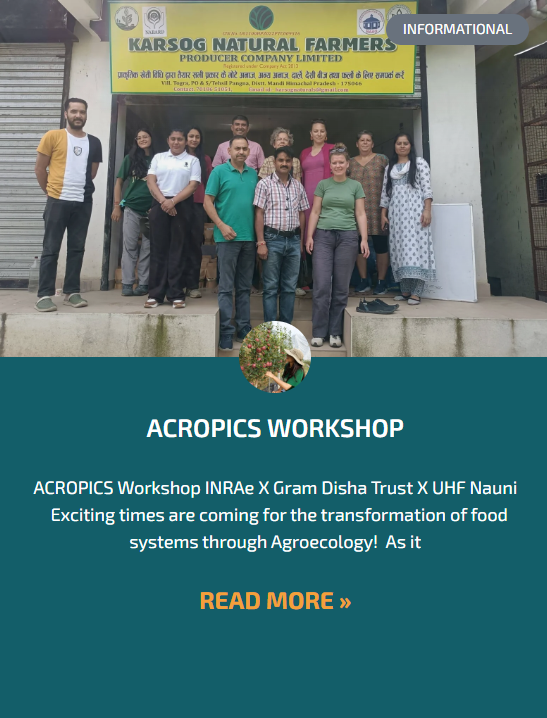
- Preparing for ACROPICS event happening between mid March to mid April.
- Planning and coordinating for Shaila Shastra Internship. Starting from raising crowdfunding, designing framework and timeline of the residency part of the internship with the masons at the centre of it (availability and material requirements) to coordinating with the interns so that they integrate well into the community, as well as ensuring the timely wrap-up of the internship with the compilation of a Shastra by the interns. Here we emphasise that the people of Baag must not feel like passive hosts of urban learners. It is with this endeavor that I intend to undertake this challenging task.
Phase III March & April+ –
- ACROPICS and Shaila Shastra will be the significant part. Regular billing of the shop. Considering the beginning of setting up of Seed Bank. Interacting with elders and documenting details related to the native seeds – stories, methods of cooking, recipes associated with a particular festival, resistance to diseases and pest, etc. and compiling this information into a Seed Passport.
- Executing programs planned in previous phases

Circular Economy
Agriculture used to be a ‘culture’, a way of life. It was a holistic system and not just a sector associated with production of food. Those who were not landowners, like artisans, were still an essential part of the rural economy. The tools and equipment required to plough land and harvest produce were made by these artisans, whose livelihood depended on agriculture, indirectly. The circular economy and short supply chains that we are pressing for in current scenario as the tools to combat climate change, used to be a living thriving system. Therefore, it is important to preserve this traditional knowledge before it gets lost. Compilation of Lauhaar Shastra and Shaila Shastra through internship programmes is an important task being undertaken at Gram Disha Trust.
Soil Microbiome
The region I come from is known to have one of the most fertile soils (rich alluvium deposited by Ganga and Yamuna). Whereas, mountain soils are thin due to slope and constant erosion and not deposition as in the case of plains.
It will be interesting for me to learn if the soil amendments I used back at home to boost soil activity works in the case of Himalayan soils or not. The amendments being basic cultures of indigenous microorganisms and liquid fertilizers made by fermenting local weeds can reduce the farmers dependence on external input. Eventually, smallholders wouldn’t have to depend on soil testing labs to get the certification. This and other kind of field trials can be attempted in the third phase with the involvement of the farmers in preparing the cultures and fertilisers.