
Agroecology is an umbrella term that entails all farming practices that include sustainable inputs and social principles. While the scientific discipline was formed in the twentieth century, the farming systems it refers to dates back more than hundreds of years, that were observed by tribal and rural cultures before the Green Revolution. The same holds true for most rural parts of Himachal Pradesh that used to grow local varieties of cereals, pulses, horticulture crops, etc. for self-consumption as well as selling, using cow dung and traditional fertilising inputs such as Farm Yard Manure from farmstead cattle. However, by the 1990s, when the Green Revolution reached these remote mountains, the government encouraged farmers to buy hybrid seeds and chemical fertilisers provided by them for high input. All farmers adopted this and increased their incomes by multifold, even as they noticed the soil quality on their land changing. Today, more farmers than before continue to utilize market-bought hybrid seeds and synthetic inputs for higher yield in predictable crop cycles — such as paddy and maize in kharif season, and wheat or barley in rabi season, with a few seasonal vegetables and annual fruits.
But what is more crucial are the farmers who transitioned back from chemical-dependent farming to natural farming, and how. According to the State Government, as of Jun 2026, over 250k farmers of the state are engaged in natural farming with 44,138 hectares of land in cultivation. The State Government is supporting these farmers by providing trainings, Minimum Support Price (MSP) and public procurements for crops grown particularly through natural farming, and introducing a free of cost self-certification system for natural farmers called ‘Certified Evaluation Tool for Agriculture Resource Analysis-Natural Farming’, or CETARA-NF.
While government-supported schemes and public infrastructure play a role in such movements, what does a household-level transition from conventional to natural farming practice look like? Who participates, decides, and has access to such a transition, do some members and households participate more in this transition than others? A study of such socio-economic indicators of natural farming households is being pursued by the ACROPICS Project. Under the project, a Gender Module for an agroecological assessment tool, TAPE, has been created to capture the social realities (including gender, caste, religion, and other social structures) of such households that might be relevant in shaping labour relations, access to resources, social interactions, and more. While inquiring into the role and experiences of women members through qualitative interviews, the Module records key legal, institutional and socio-cultural conditions that affect gendered roles. These include land inheritance laws, typical household arrangements, social norms shaping agricultural labour, migration, remuneration, market and credit access, internet connectivity, and more.
Women As Stewards of Natural Farming
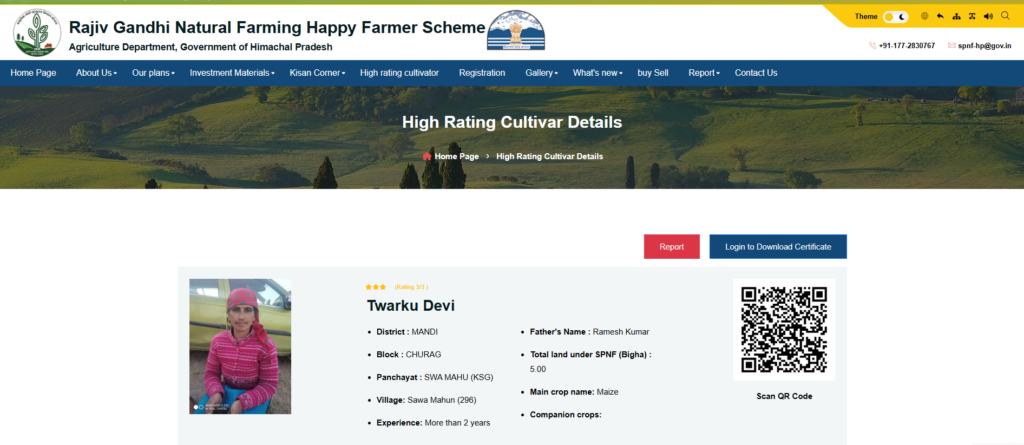
Any big transition starts with a small seed. The seed of transition from chemical-based farming to natural farming was often germinated by the women of the household. The women are often the first to notice the impact of chemical fertilisers and insecticides on the health of their family members or the soil. “Many of us started noticing the widespread illness of people around us, especially cancer. We realised that this is because of the heavy usage and exposure to chemicals on our own farms,” says Ms. Twarku Devi (50) from Churag village, Karsog.
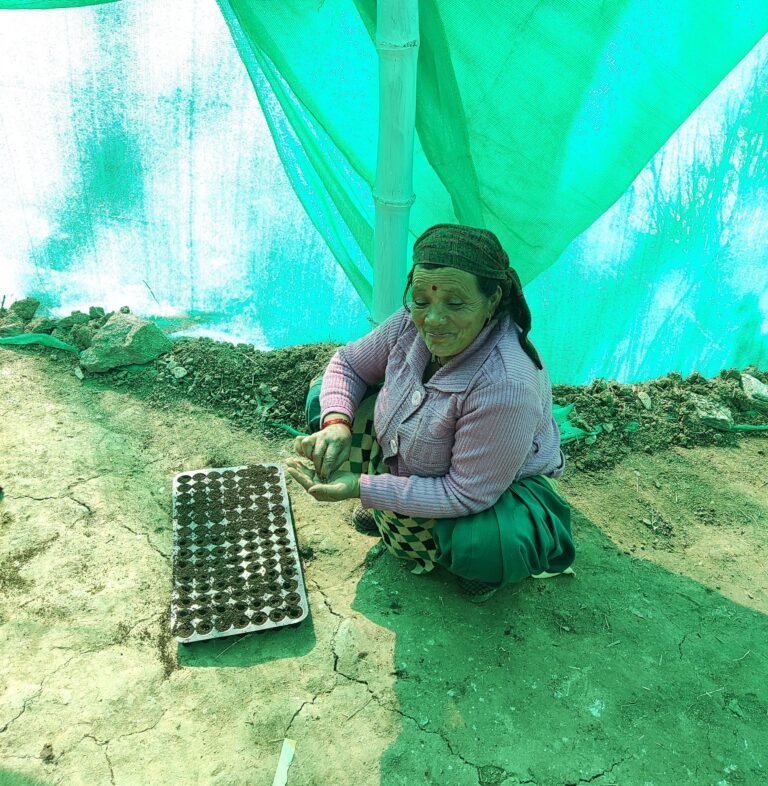
For Twarku, it was eight years ago when she first realised the need for a shift in their farming practices. Today, she grows a variety of local rice, apples, native fodder grasses, and millets in inter-cropping/mixed-cropping patterns, and uses bio-inputs including Jeevamrit, Beejamrit, and Panchagavya on more than 50% of her 20+ bigha land (>1 acre). She divides her time between being a farmer and the secretary of a Cluster-Level Federation to support over 1200 women in livelihood by handholding in value-added products.
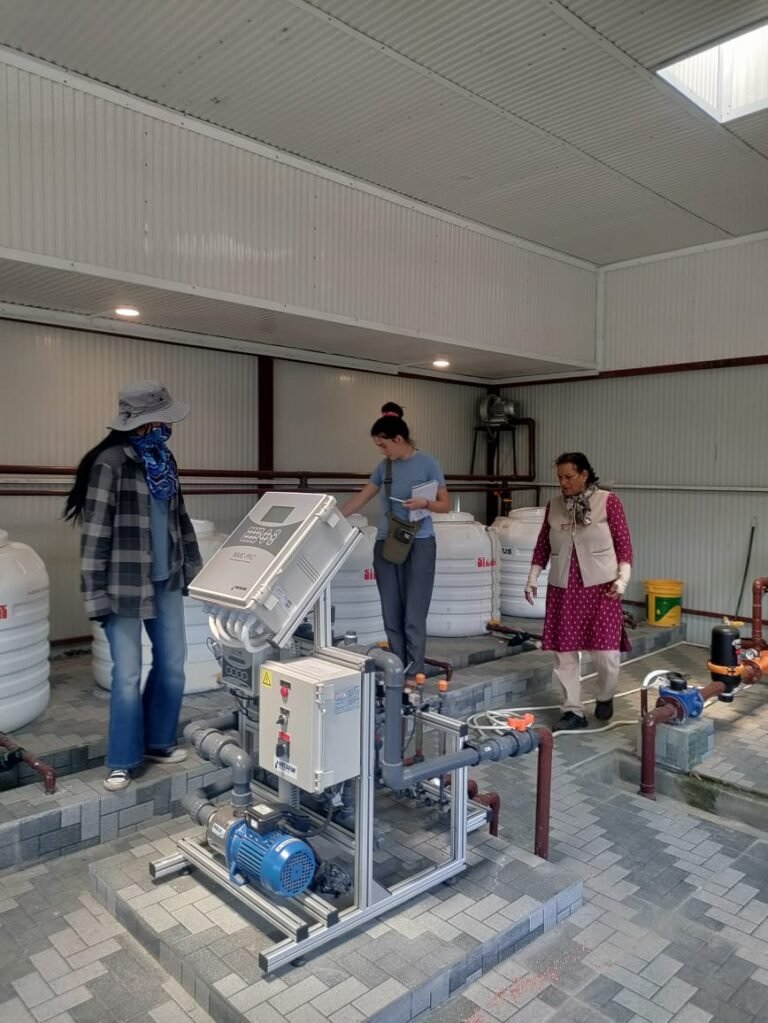
For Ms Rajni Rawat (57), it was in the late 1990s, when her father’s health declined because of diabetes, that she decided to reduce the use of chemicals. Rajni runs Kalasan Nursery Farm along with her husband and two daughters in the Thandapani village of Pangna. The farm spreads over 12 acres the farm is home to apricots, avocados, persimmon, kiwis,over 2,000 blueberry plants, more than 11,000 apple trees and vegetables including tomatoes, cauliflower, capsicum, and cucumbers.
Almost forty kilometers away, in the Nanj valley of Mandi, Ms. Ramkali Sharma mentions how the declining health of land was evident since the introduction of chemicals. “We all started noticing how our land’s soil is unable to hold as much water anymore,” she says, “but everyone else continued using chemicals, because its productivity was higher.”
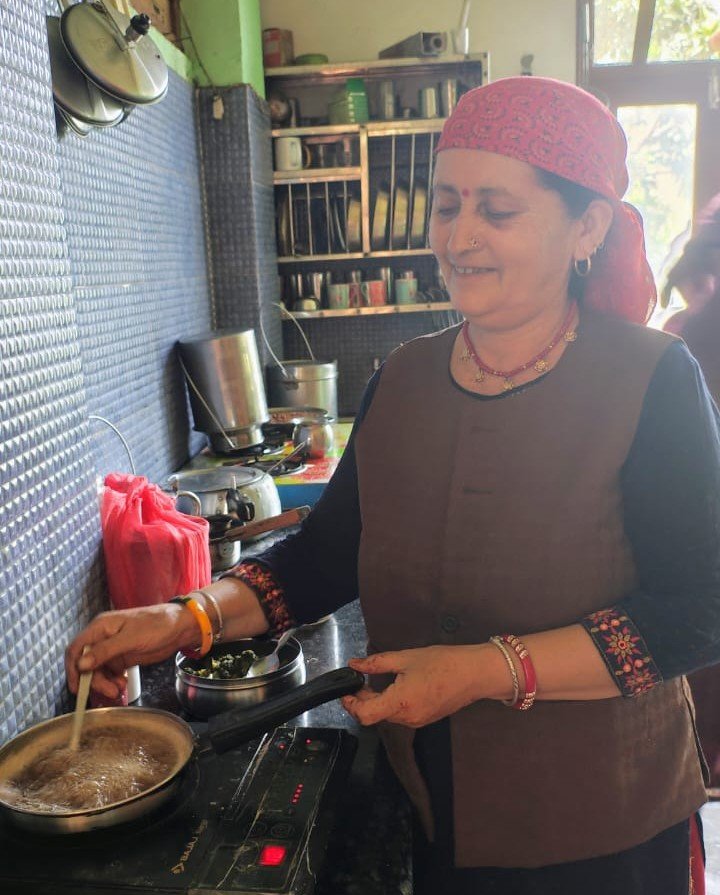
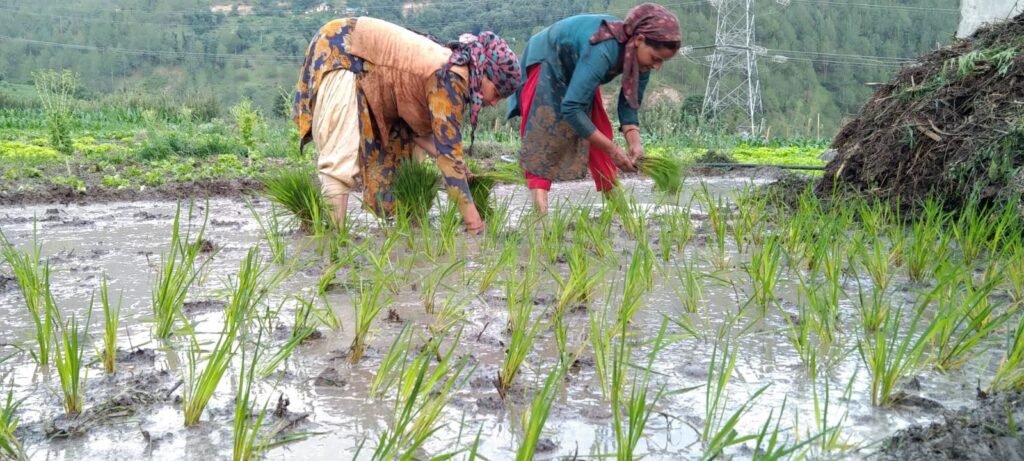
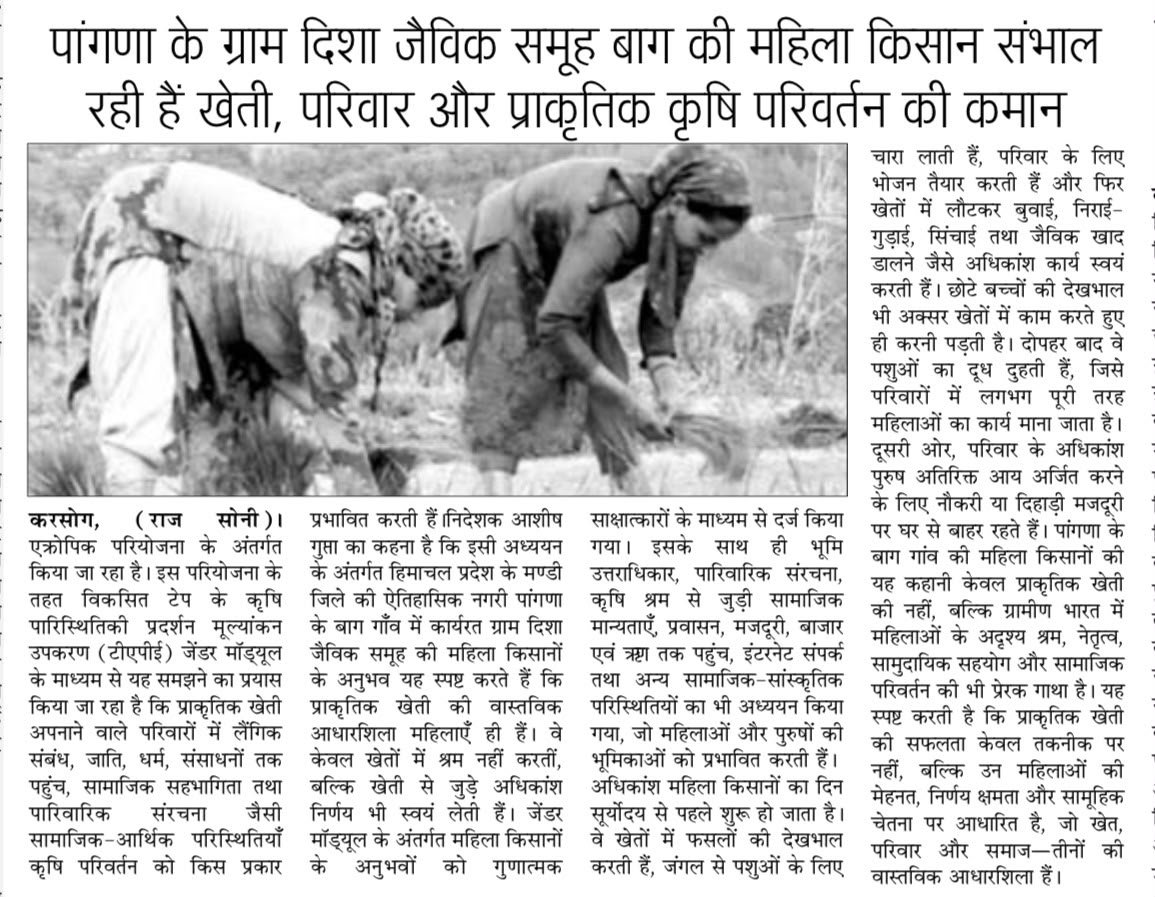
The fact that these women were the first to notice these effects on the health of their surroundings also points to something else — these women as the primary caregivers of their family as much as their land. For most of these women, their day starts at dawn, with getting out of the house to tend to their crops, fetching fodder from the nearby forest for their livestock, and coming back to prepare breakfast for everyone. In case there is a daughter-in-law in the same household, these chores get divided among them. These women often take their kids along to keep a watch over them as they prepare the land, sow, water, fertilise, or do weeding. They come back to serve lunch, before going back to milk the cattle, which is almost always a woman’s job. Meanwhile, the men of the house go out for jobs or daily-wage work to earn an extra source of income for their family. With a rise in the cost of chemical inputs and uncertainty in the sale price of produce, farming is rarely a sole income for smallholding rural households.
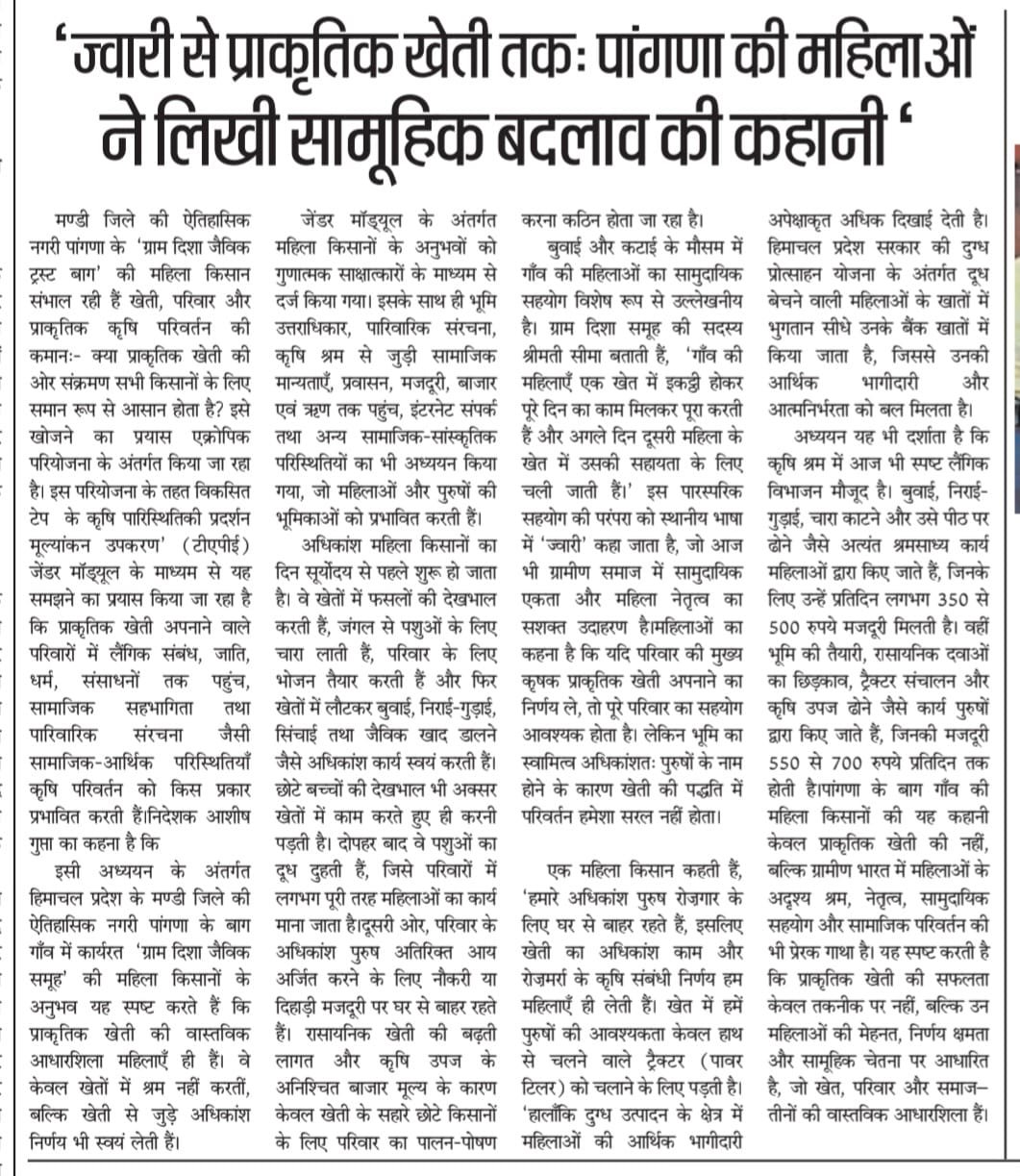
And this doesn’t remain limited to their household. During harvest and sowing seasons, when work on the farm is tremendous, Ms. Seema, a woman farmer from Village Baag narrated, “the women of a village often gather on one farm to finish the work in a day, and then go to the farm of another woman to help her out.” This community-based agricultural reciprocity is called Jwari, often carried forward by women.
So if a woman as the primary farmer of the household realises the need to stop using chemical inputs, the household should be able to shift its farming practice. However, with male heads as the land owners, the transition is not as simple.
Who owns, who grows, and who decides?
Even after Twarku realised the need to change her farming practice, she felt a lot of social pressure. “Natural farming requires a lot more labour as compared to conventional farming. You have to work with cow dung and urine, so this type of farming is looked down upon,” says Twarku. She goes on to tell us how she convinced her family to go through this transition. “It was the hardest to convince my parents-in-law. My husband was supportive about it in the beginning, but after realising the work involved with cow dung, even he stopped supporting me. I didn’t give up until they all agreed. Today, after seeing people visit me and appreciate me, they respect me for what I do,” she says.
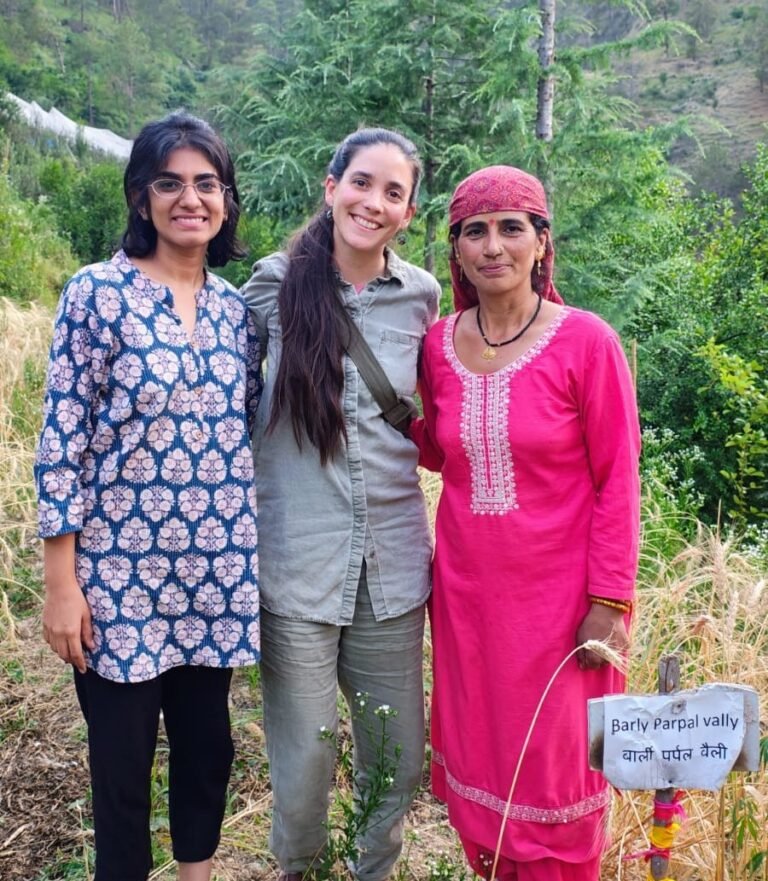
When we walk with her in her farm, she is excited to get a picture with us in front of her labeled crops. She solely looks after the farm, be it preparing the land, sowing, pruning, irrigating, preparing and timely spraying bio-inputs. “I go into the forest every few days with other women to collect ten kinds of leaves, which are then pulverised into making Dashparniark,” she explains. She hires labour on a daily basis sometimes whenever required for pulverising these leaves, and then during harvest season.
However, for the apple orchard for which she’s still using chemical inputs, her husband handles most of the work after his day job as a primary school teacher. “He’s taken training in pruning, so he handles most of the orchard’s work, and sells all our produce in the market,” she says.
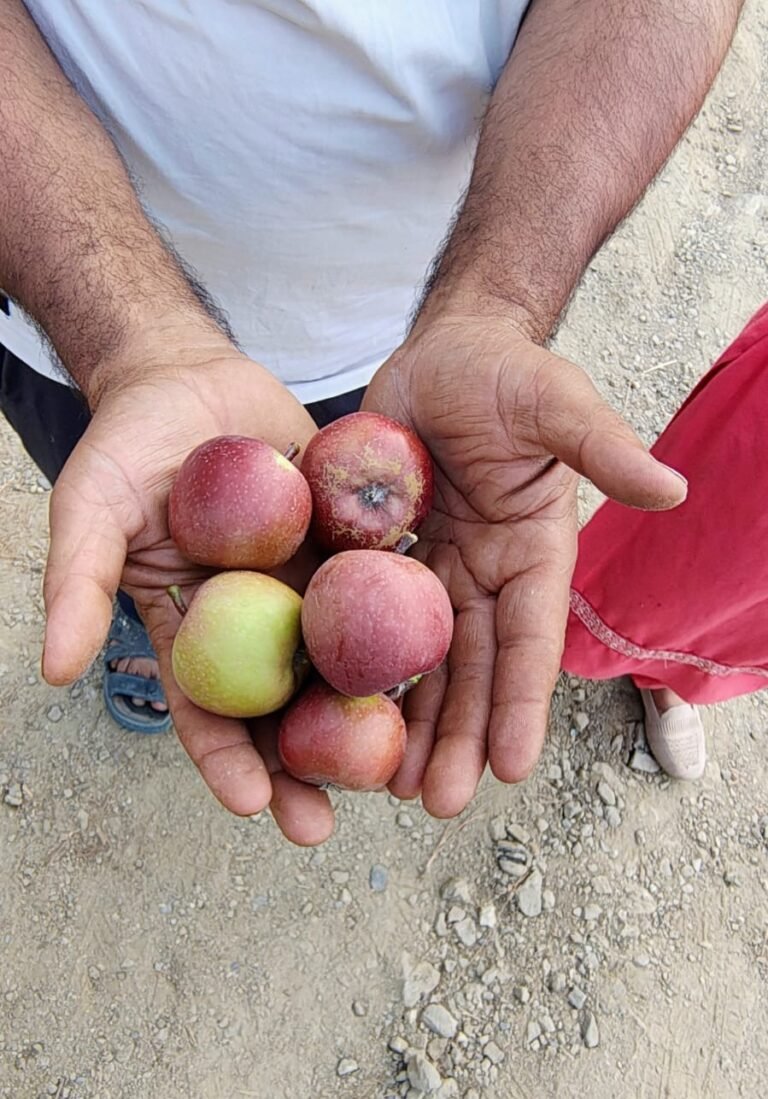
Gaimbhi Devi from Baag describes her work similarly: “Most of our men are away for work, so most of the work on the farm and everyday decisions are taken by us. We require our men on the farm only to operate the hand-held tractor. Even for buying our produce, the vendor sends his vehicle till our door to fetch the vegetables.” Just as she finished, Mira, another woman farmer, interrupted, “But our men suddenly appear when it is time for payment,” and burst into laughter. It is tricky to get these vendors to pay on time. There have also been times when the vendor did not pay at all, excusing himself by saying that he incurred a loss because of low market price. So the men have to keep calling the vendors to remind them about the payment, which gets received in their accounts in most cases.
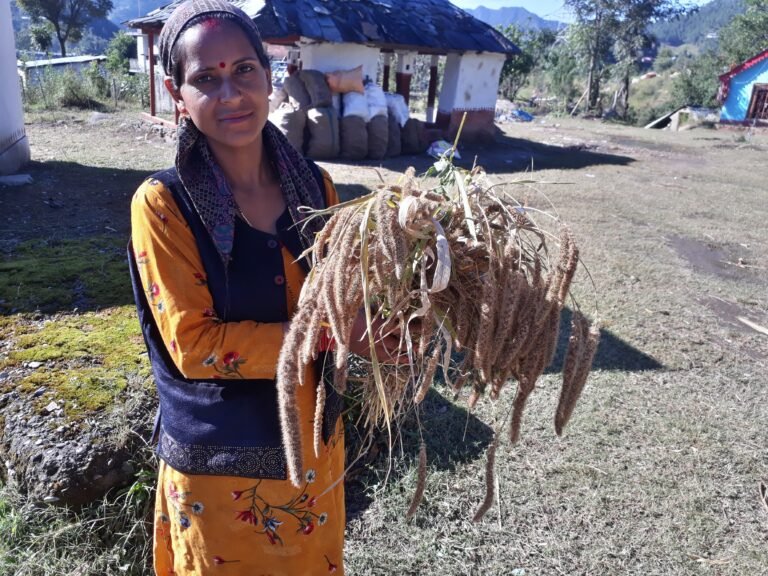
However this is not the case for the milk these women sell. “We get the payment for the milk we sell in our accounts only,” one woman said. The women sell milk under the ‘Dugdh Protsahan Yojana’ milk scheme by the HP govt, which encourages women beneficiaries.
This gendered distribution of labour can be observed even in the hired agricultural workers (a mix of local villagers and migrants from Uttar Pradesh, etc.) hired heavily during harvest or sowing season. Women workers are paid Rs 350-500 per day to perform hands-on chores such as sowing, weeding, cutting fodder, collecting them into piles, and then carrying them on their backs. Meanwhile, male workers perform tasks involving carrying heavy weight or using machinery. So, men are hired at Rs 550-700 for land preparation, spraying chemicals, driving tractors, and carrying produce, as multiple women farmers described.
One perspective of the market is also the lower number of initiatives taken by women producers as entrepreneurs. Delhi based social enterprise JaivikHaat, over the last 17 years, has supported numerous women producer led market linkage, yet even after this duration out of 50 or so supply sources about 6 are women producer led. With about 12% direct participation with the markets, there is a clear gap for the Market Systems Transformation. This reveals better systems innovations for enabling women producers – especially smallholders to have a choice of direct market participation.
Thus, while women remain the primary farmers in a household, spending the most hours out of every other household member, the decisions involving what to grow and how remain largely with male household heads, the landowners.
Twarku is one of the lucky few, whose family supports her. Having worked with hundreds of women in Karsog and Pangna, she approximates that only one in every five women who indeed want to start doing natural farming are able to do so.
This is where the true power of a women’s self-help group lies.
Natural Farming: A Movement Led by Women, Supported by Government
If one looks beyond the tourist hubs of Himachal, to go to the local shops and weekly markets, one will come across many women-run fronts selling organic honey, ghee, fruit jams, soaps, pickles, naturally-grown vegetables, and hand-woven bags, pillow covers, cardigans, and trinkets. Some of these stores also have women cooking traditional foods like Siddu, Bahbroo, and Patande.
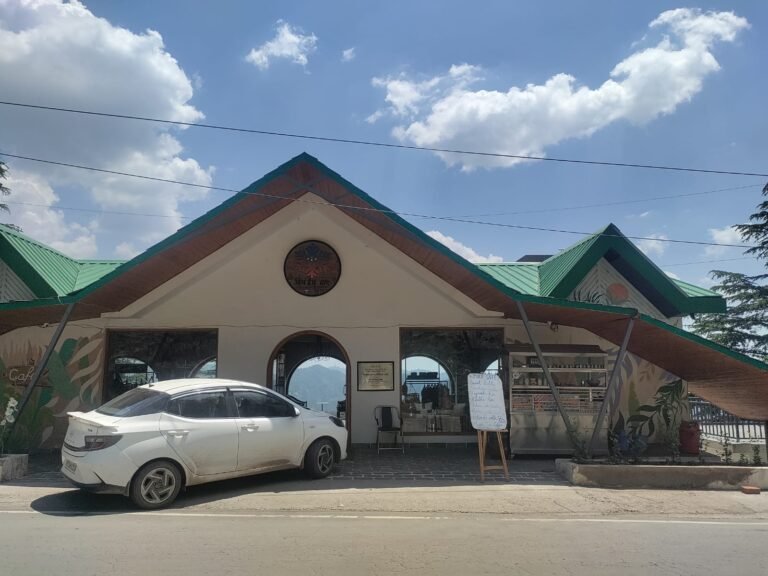
These have been made possible through the Himachal Pradesh State Rural Livelihoods Mission (HPSRLM) that supports women’s self-help groups and farmer producer organisations by providing capital support, skill development, and market linkages. Currently, 45,295 Self-Help Groups (SHGs) and 216 Farmer Producer Organisations/Companies (FPOs/FPCs) have been registered within Himachal that promote organic products in 109 standalone shops and 81 weekly markets. Our team visited a HimIra store at Naldera to understand how these stores function with social and economic empowerment to women at its core, while supporting the local economy.
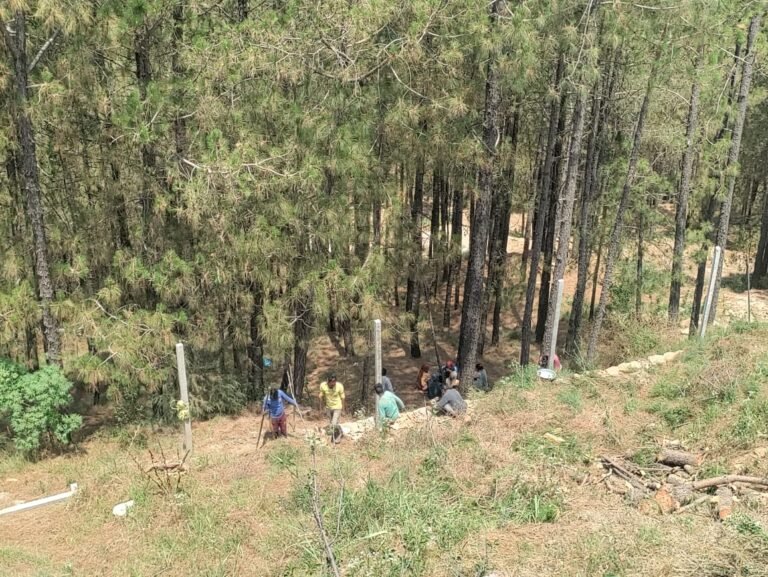
It is women like Twarku who are supporting many such women to come out. Every time she makes Jeevamrit, she gives parts of it to women farmers in her village. She’s received multiple training in natural farming and local seeds by the Department of Agriculture and non-government organisations, and supports other women farmers to start natural farming on small patches. She helps them get access to credit and interest-free loans from the Cluster-Level Federation. “Today, around Rs 3 lakh cumulatively has been given as loans to many women through the cluster.”
This movement towards supporting women smallholders is not just a scheme but an essential practice towards meeting the goals of the 2030 Global Agenda for Sustainable Development:



However, most such initiatives are up and running as long as government support is available. Despite the community-ownership model of Him-Ira stores and their state-wide popularity and presence in prominent locations, no store is able to run on its own profitability, thus reflecting the uncertain future of pursuing sustainable livelihoods for small-holding farmers.
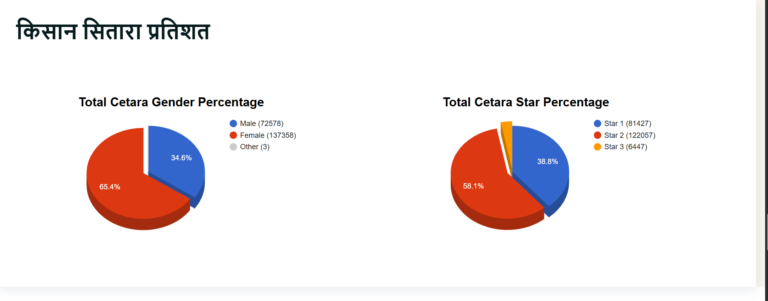
The Natural Farming Certified Evaluation Systems (CETARA-NF) which is a Digital Innovation by the Government of Himachal Pradesh also has macro indicators which strengthen the role of women as the primary contributors to natural farming movement in the state. With over 200,000 farmers under the CETARA over 65% are women farmer. A large number of this are also 2 and 3-star rated women farmers. These indicators clearly shows the importance of gender in the Agroecological movement in the state.
Among medium-holding farmers, there is still hope to design a natural farming system that can eventually run profitably. Vasudha, Rajni’s elder daughter, is interested in starting a fruit-processing unit at her parent’s farm. She said her younger sister is already in Germany getting trained in value-added products out of fruits. Rajni explained how her daughters plan to run their family farm and nursery even after they get married. “They’ll find a way between the two of them to balance between staying on the farm and operating from outside.”
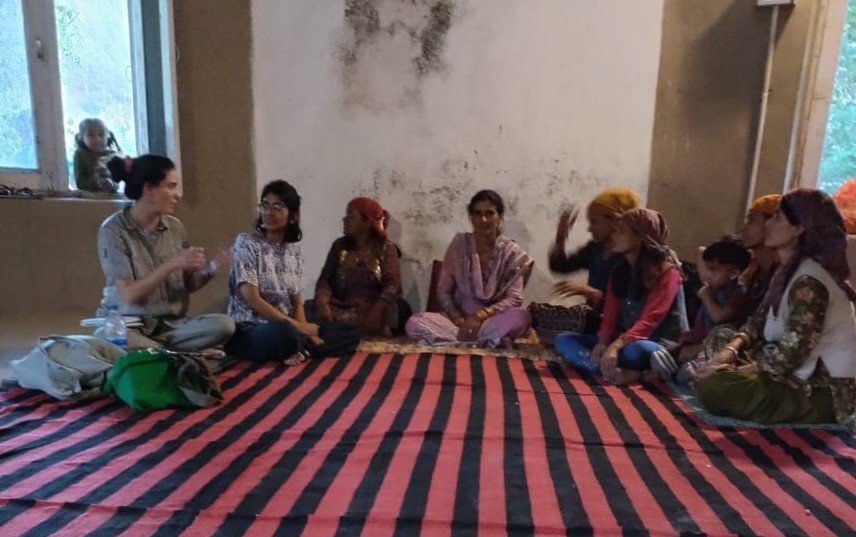
As one of the board of directors of the Karsog Natural FPC, Twarku is still hopeful about enabling the women of Baag in opening an organic food stall in the local market. “You’d have to arrange for funds partially amongst yourselves, but once you take the initiative, there are various government schemes through which you can raise credit for your stall. And you won’t even have to start paying back for three years,” she explained to members of the Baag SHG sitting with her.
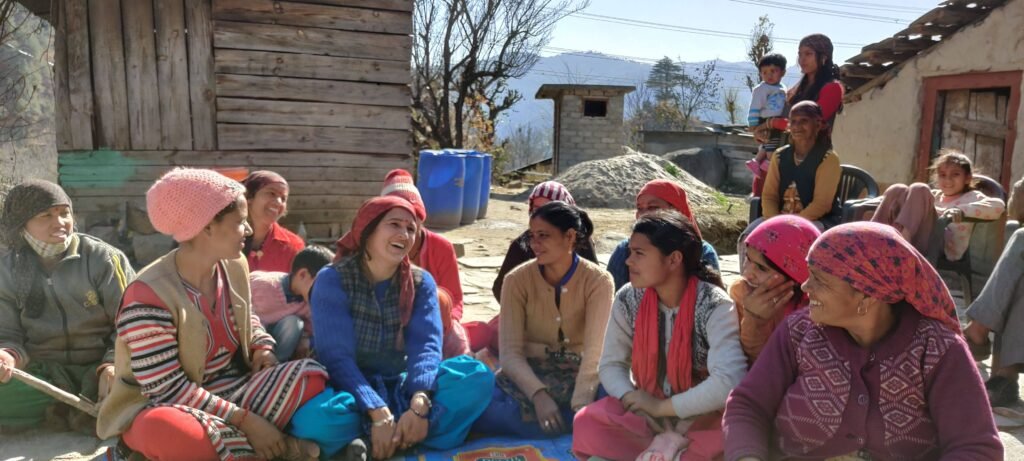
“If we get assured income, then it will be easier for our family to let us step outside,” Seema raised the most immediate concern on everyone’s mind. When it came to dividing the time amongst themselves to attend the shop, they came up with the plan spontaneously: “Each of us can take two-hour shifts, and whenever someone is required at home, the other can cover for her. Like that, we all can cover for one another. We can maintain a register to note these hours, so that at the end of the month, we can get paid for the hours we spent at the shop.”
However, the idea of the organic food stall was like a house of cards that tumbled at the touch of local reality. “If people find out that the food is being prepared by us, people may not come to our stall,” a few concerned women farmers told Twarku on call a few days later, reminding her of the marginalised caste she comes from. Especially with another food stall already being run by an upper-caste community in the same market, the women were uncertain about their own capability and the shop’s profitability. This in turn made their families hesitant in investing time and money required to open the shop, leaving the women no choice but to opt out.
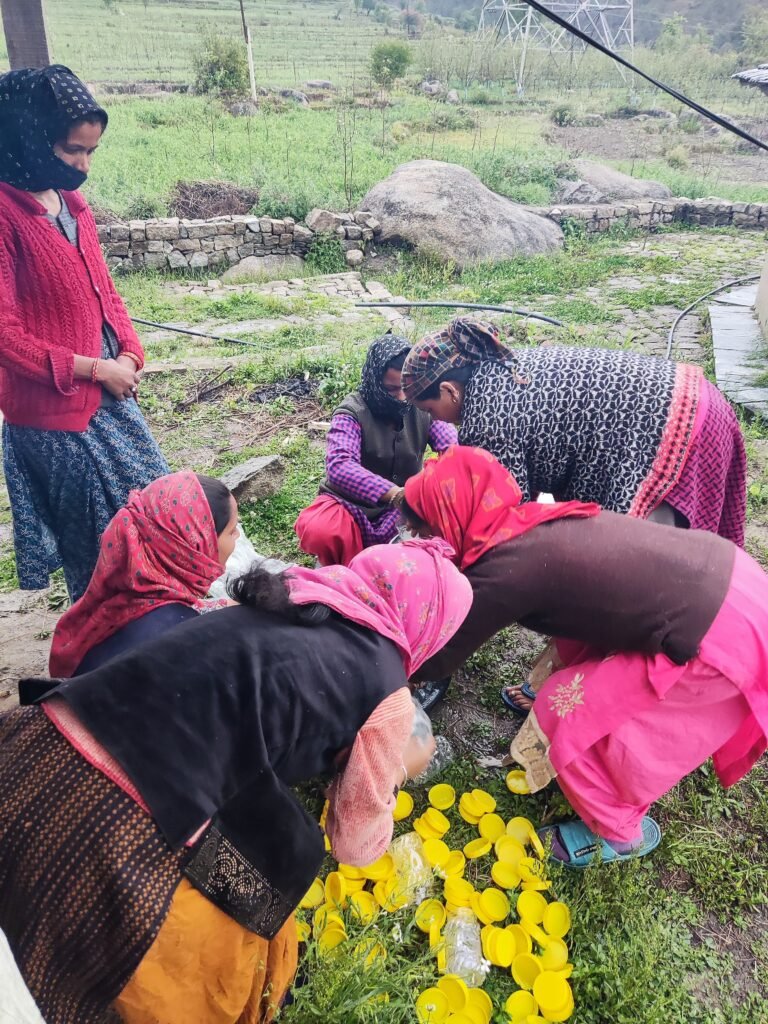
This points to how caste continues to shape agrarian realities across the country, be it land distribution or equal social access. Marginalised caste groups in Himachal form a majority of the agricultural labour, while medium to large landholders in the state disproportionately belong to dominant castes. Caste-based social segregation further restricts them from accessing dignified livelihoods, creating continued disparity in the diffusion of sustainable livelihoods.
While the story of women at the forefront of natural farming and running local businesses is surely a story of empowerment, this empowerment doesn’t come easy, if at all. Even if some women manage to step out of the house and grow food the way they want, the social realities of caste and the uncertain economic reality of running a sustainable livelihood in today’s market fail them. And amidst all this, the women must not forget the undivided domestic and caregiving work awaiting them back home.
“Sometimes, I want to give more time to my farm, but I really want to help the women who come to me for help. I want all of them to come out and do what they want,” Twarku said. Looking at her husband and smiling, she calculated how she plans to divide her time in the future — 20 days a month to farming, 5 days a month to support other women, and the remaining for her parents-in-law. “It is important to spend time with them and take care of them also, otherwise they’ll get upset,” she broke into laughter.
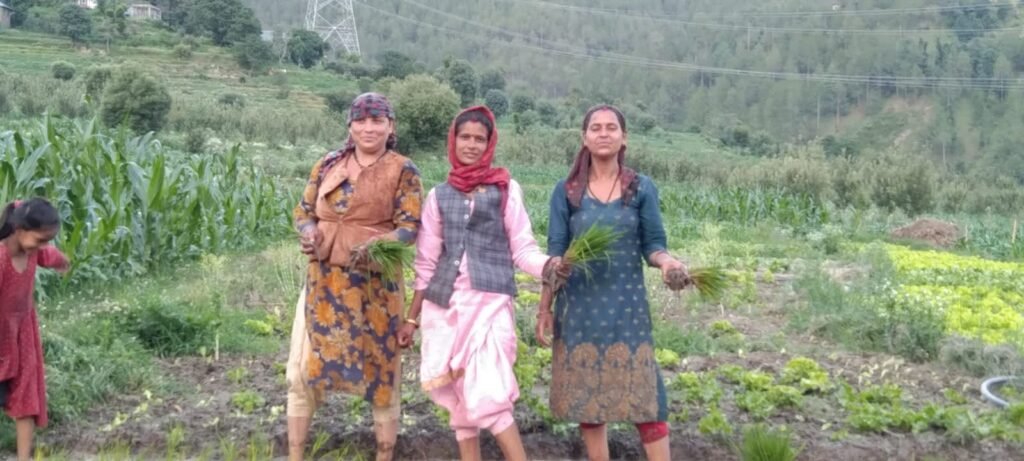
When a resilient food system such as natural farming is being promoted for its positive impact on local ecology and human health, it must also acknowledge on whose labour this practice is possible, be it women or certain marginalised social groups. Agroecological systems must adjust the social and economic cost of these people in its output if they are to become equitable food systems. And it begins by building a strong social and gender module in all its tools and frameworks. The ongoing research by the ACROPICS team, especially during the International Year of Women Farmers in 2026, is a welcoming step towards building equitable food production landscapes, and we look forward to the module’s findings and integration in TAPE in the coming years.
Final Note: Recommendations For The TAPE-Gender Module
The pilot testing of the TAPE-Gender Module across a diverse range of household types enabled the team to assess its applicability and effectiveness in varied socio-ecological contexts — be it the smallholders and agro-pastoral households in the Indian Himalayas, to farmsteads in Senegal. These interviews helped evaluate the Module’s ability to capture context-specific gender differentiation across farming systems. Feedback provided by Ashish Gupta and Ankita Marwaha, who accompanied Luciana during the field visits, informed the refinement of the Module, including the addition and revision of several indicators.
- The desk review of the Module led to the addition of roles that women farmers often perform when the male members are away for work, i.e. protecting farms from wildlife attack. This also includes women’s participation in agricultural songs, rituals, and community planning — an important socio-cultural element in many Global South countries.
- To ensure that social realities of agricultural societies are captured, the profiling of hired labour was revised to include ‘Social Group’. This can include caste, religion, and other indicators that may highlight the social structure of the society being surveyed.
- To extend the question for pastoral and agro-pastoral households, the ‘Decision-Making’ indicator has been modified to include the role of men and women in the following decisions: seasonal migration route for that year, which household member goes for migration, where resting-stops are made, how much factors such as women’s security and healthcare access (particularly if pregnant women are migrating) affect these decisions during migration.