
Beyond Fair Prices: Why India Needs a More Transparent Food Supply Chain
How MoolyaSHIKHAR Can Connect Farmer Livelihoods, Viable Distribution and Accessible Food.
By changing how we discover prices, account for costs and understand the distribution of value.
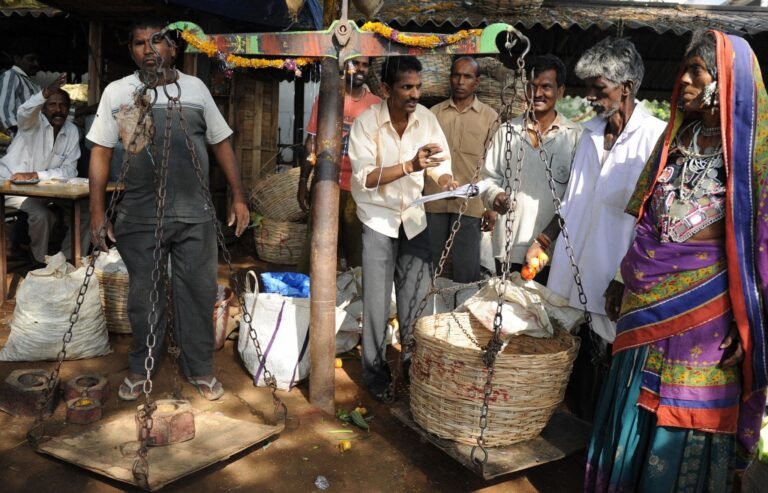
The problem is not simply that farmers receive low prices. It is that they often have too little visibility into how those prices are determined
Consider a farmer preparing to harvest a crop. Months of work, investment and uncertainty have gone into producing it. The farmer has made decisions about seeds, labour, water, nutrients and crop protection, often under conditions that no spreadsheet can fully capture. Now the harvest is ready, and the farmer must turn that investment into income.
The market offers a price. But what does that number actually tell the farmer?
To understand this, three terms need to be distinguished.
Cost is what the farmer incurs to produce the crop. Price is what the farmer receives when selling it. Realisation is what the farmer ultimately retains after applicable deductions, adjustments and transaction-related costs.
These are three different numbers, each answering a different question. Cost tells us what it takes to produce. Price reflects what a buyer is willing to pay for the product in a particular market and context. Realisation tells us what the transaction actually delivers to the farmer.
A viable agricultural transaction must account for all three. Production costs cannot independently dictate market prices, but market prices cannot be understood without considering the economics of production.
A farmer may incur a cost of ₹100 per kilogram to produce a crop, while the nearest mandi offers ₹70. A distant market may appear to offer ₹140, until transport, grading, handling, shrinkage and selling costs are deducted. Meanwhile, the crop continues to lose value with every passing day.
The farmer is not simply negotiating a price. The farmer is negotiating under a deadline, with incomplete information and limited room to absorb a mistake.
This is where the conversation about better agricultural markets needs to begin: not with the assumption that every farmer deserves a predetermined premium, but with a more fundamental question. How can we make price discovery, transaction settlement and the distribution of value more transparent and economically informed?
We have modernised agriculture without adequately redesigning the relationship between farmers and markets.
India has made extraordinary progress in agricultural production, scientific research, market infrastructure and digital connectivity. Yet technological progress does not automatically translate into greater bargaining power or economic security for producers.
Price information may be available online. Quality grades may be defined. Government support mechanisms may exist. Farmer Producer Organisations (FPOs) can aggregate produce, and digital platforms can connect buyers and sellers. These are important capabilities, but they do not necessarily solve the entire problem.
Knowing the prevailing market price is not the same as knowing what a particular lot should fetch in a particular destination. Knowing the cost of cultivation is not the same as finding a buyer willing to cover it. Receiving a quality certification is not the same as earning a premium for that quality. And connecting a farmer to a buyer is not the same as understanding what the transaction ultimately delivers to the farmer.
Each system may solve one part of the problem while leaving the rest to another institution or, ultimately, the farmer. The missing link is often the coordination between production economics, product quality, market demand, distribution costs and final realisation.
A more effective system must bring these elements into the same commercial conversation.
Price discovery should begin at the farm, but it cannot end there
A credible pricing framework needs to look in two directions.
The first is towards the farm.
What did it take to produce this crop? What labour and other resources were used? What risks did the farmer bear? What return would make continued production economically viable? Are there additional costs associated with changing farming practices, maintaining traceability or meeting specific quality standards?
These questions matter because the economics of production determine whether a farmer can afford to produce again.
When production costs and the risks of changing farming practices remain invisible, farmers may be expected to supply safer, more diverse or ecologically improved food without a commercially credible way to recover the additional effort. The benefits may be distributed across consumers, communities, ecosystems and public health, while the immediate financial burden remains concentrated on the person cultivating the crop.
The second is towards the market.
What will buyers pay for the product’s actual quality? How much demand exists across different locations? What are competing suppliers offering? How much will it cost to move, store, grade and sell the produce? What volume can realistically be sold before its quality deteriorates?
A cost-based price without market validation risks becoming an aspiration. A market price without production economics risks becoming a signal that the farmer must simply accept, even when it makes continued production unsustainable. Neither perspective is sufficient on its own.
MoolyaSHIKHAR seeks to connect these perspectives by bringing together production economics, product quality, destination-market realities and distribution costs to establish a Minima–Maxima price range. Actual transaction outcomes and market feedback further inform the process. The objective is to understand both the economics of producing a crop and the commercial realities of taking it to market.
The objective is not to declare that a crop has one universally correct price. It is to make the assumptions, trade-offs and eventual outcomes behind that price more visible.
Transparency means explaining the entire transaction, not just the selling price.
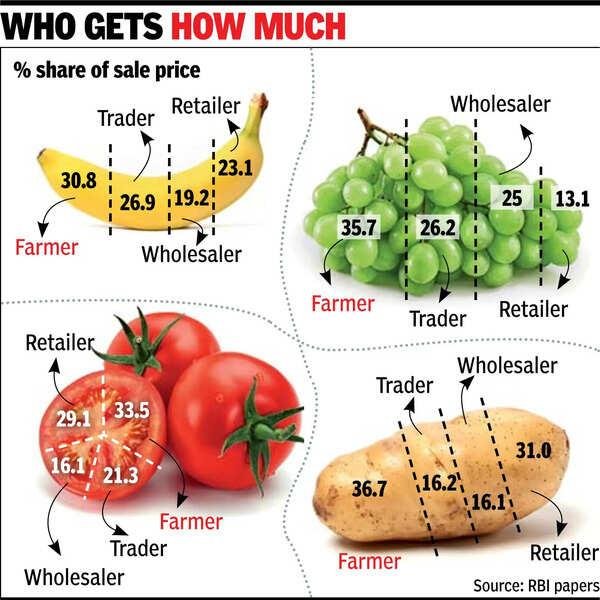
Imagine a farmer’s produce being purchased, transported to a city and sold through a combination of wholesale and direct-to-consumer channels. The final consumer price may be substantially higher than the initial payment to the farmer. But the difference alone does not tell us whether the supply chain is exploitative or commercially justified.
That gap may include transport, sorting, packaging, storage, spoilage, unsold inventory, retail operations, customer acquisition, financing and the margins required to keep the business running. Some of these activities create genuine value. Others may reflect avoidable inefficiencies. Some costs may be reasonable in one route to market and excessive in another.
Without transaction-level visibility, it is difficult to distinguish between them.
A transparent system should therefore help answer several questions:
What price was agreed with the farmer, and on what basis?
What quality and quantity were accepted?
What deductions were made for grading, weight loss, damage or shrinkage?
What was the realised selling price across different channels?
What did transport, handling and distribution actually cost?
What amount ultimately reached the farmer, and when?
What margin remained with the distribution business after accounting for the relevant costs?
This is particularly important when the initial farmer payment is followed by a final settlement. An advance or provisional payment can provide useful liquidity, but the farmer should understand the rules governing the eventual adjustment. The allocation of risk must not be hidden inside a calculation that only the buyer or intermediary can interpret.
Transparency is not achieved simply because a price appears on an app. It is achieved when all parties can understand how that price was determined, how it changed, what adjustments were made and who bore the consequences.
That is the difference between publishing information and improving the quality of a commercial relationship.
The farmer should not be the default shock absorber for the entire supply chain.
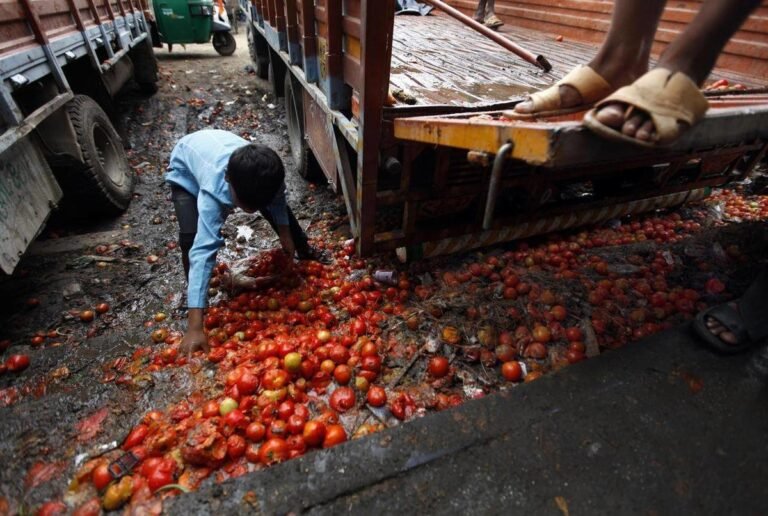
Agricultural markets are inherently uncertain. Weather affects supply. Harvests arrive together. Demand fluctuates. Quality varies. Logistics fail. Consumer preferences change. Perishable inventory loses value.
These risks cannot all be eliminated, but the way they are allocated can be redesigned.
In many transactions, the farmer has already carried the production risk before the first buyer arrives. If the market is weak, the farmer may have to accept a lower price. If the crop cannot be sold quickly, the loss may fall on the producer. If a new farming practice produces uncertain yields during a transition period, the farmer may be expected to absorb that risk as well.
This creates a structural problem: the person with the least financial capacity to absorb uncertainty can end up bearing a disproportionate share of it.
A more balanced distribution model would distinguish between risks the farmer can influence and those created by decisions elsewhere in the supply chain. Quality standards should be clear before procurement. Grading rules should be agreed upon and applied consistently. Shrinkage and unsold-stock losses should be accounted for transparently. Buyers and distributors should have incentives to forecast demand and manage inventory rather than relying on the farmer to absorb every adverse outcome.
Where a transition in farming practices creates wider environmental or public-health benefits, commercial buyers and consumers alone may not be able to finance the entire transition. Appropriate public support, ecosystem-service payments or other financing mechanisms may also be necessary.
MoolyaSHIKHAR contributes to this shift by bringing measurable parameters into the pricing process. Production costs, quality, logistics, losses and market realisations become visible, allowing the economics of a transaction and the distribution of value and risk to be understood and negotiated on the basis of evidence. Its Minima–Maxima framework provides a structured basis for evaluating the commercial potential of produce across destination markets.
The principle is straightforward: risk should be acknowledged, measured and allocated deliberately, not quietly transferred to the party least able to bear it.
A distribution model must work for the farmer, the business and the consumer.
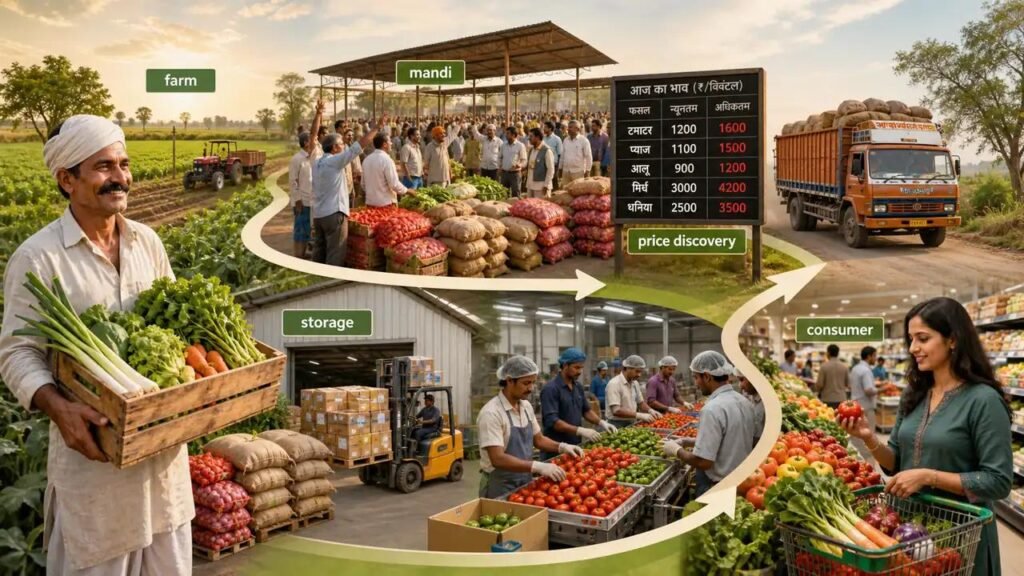
The objective is not to ensure that the farmer always receives more or that the intermediary earns less. It is to establish the true value of the product through transparent, measurable parameters, so that every participant understands the economics of the transaction and the basis on which value is created and distributed.
This does not require the removal of intermediaries. Aggregators, traders, logistics providers, retailers and market platforms perform essential functions. They aggregate fragmented supply, create market access, manage inventory, move produce, absorb operational risks and connect products with consumers.
Different activities require different investments, capabilities and levels of risk-bearing. There is no reason to expect every participant to earn the same percentage of the final consumer price. The relevant question is whether the costs, risks and margins associated with each activity can be explained and whether they are justified by the value created.
An inefficient distribution chain can impose costs on everyone. Poor demand forecasting can create surplus inventory. Fragmented procurement can increase handling expenses. Inconsistent grading can lead to disputes and rejections. Weak coordination can cause delays, spoilage and avoidable markdowns. Multiple hand-offs can increase costs without improving the product.
A better-designed supply chain can create value by reducing these losses and improving the match between supply and demand.
Consider a simplified example. A farmer’s produce reaches a distant market where the selling price appears attractive. But if the lot is poorly matched to demand, much of it may need to be discounted or discarded. A lower-cost route with a committed buyer may ultimately generate a better net realisation, even if its headline selling price is lower.
Conversely, a buyer may be willing to pay more for consistent quality, traceability, dependable supply or a product that meets a clearly defined consumer need. If these benefits can be demonstrated and the supply chain can deliver them, there may be room to reward the farmer without making the product unaffordable.
Market value is not universal. The same product can command different prices across geographies and consumer segments, depending on its origin, quality, differentiation, availability and perceived value. Imported apples and kiwis, for example, may command a premium in markets where consumers value their origin, quality or distinctiveness. The same principle applies to differentiated domestic produce.
This is the economic opportunity: not to maximise one participant’s share in isolation, but to improve the total value created and make its distribution more transparent.
A successful model must answer three questions simultaneously.
For the farmer: Does the transaction provide a viable net realisation, taking into account production costs, the risks undertaken and the farmer’s available market options?
For the distribution business: Can procurement, transport, inventory, quality management and selling generate a sustainable contribution after accounting for relevant costs?
For the consumer: Does the product meet the quality, price and availability expectations of the consumer segment and geography it serves? Is it valuable enough to earn a repeat purchase?
These outcomes are interconnected. A farmer’s improved realisation is difficult to sustain if the distribution model is commercially unviable. Low consumer prices achieved by squeezing the producer can undermine supply over time. And a distribution business that cannot manage its costs cannot provide a durable connection between farmers and markets.
The objective is not to promise that every participant will always achieve their ideal outcome. It is to create a system in which trade-offs are understood, avoidable costs are reduced and the value generated is distributed on explicit, explainable terms.
Better markets can also make better farming systems economically possible.
The implications extend beyond the price of an individual shipment.
Farmers decide what to grow, which inputs to use and whether to adopt unfamiliar practices based partly on the income they expect to earn and the risks they can afford to take. If markets reward only a narrow set of crops, predictable volumes and easily standardised products, farmers have weaker incentives to diversify. If produce grown with greater ecological care incurs additional labour, transition or verification costs without a credible route to market, farmers may have little reason to continue those practices.
This does not mean that every product labelled organic, natural or regenerative automatically deserves a premium. Production claims need credible evidence, quality must meet buyer expectations, and the economics must be tested. Nor should consumers be expected to finance the entire transition through higher retail prices.
It means that farming practices cannot be separated from the commercial systems that reward them.
Market design influences what farmers can grow profitably. Procurement decisions influence which qualities are valued. Distribution economics determine which crops can reach consumers at reasonable prices. Payment reliability influences whether farmers can reinvest in the next season.
A more transparent pricing and distribution framework can help reveal these connections. It can show where a premium is justified, where the costs of a preferred production system are not being recovered, and where inefficient handling or excessive intermediation is making good food unnecessarily expensive. It can also help identify when a market premium is insufficient to finance a broader public benefit, and when policy intervention or collective investment is required.
This is a more useful goal than treating the organic label, a certification or a particular farming philosophy as the solution in itself. The objective should be to create conditions in which sound farming practices can be adopted and sustained because the economic system recognises their costs, rewards credible outcomes and does not leave farmers alone to finance the transition.
Why MoolyaSHIKHAR matters
MoolyaSHIKHAR’s significance lies in its attempt to bring the economics of production and the realities of the market into a common framework for price discovery and transaction settlement.
Its Minima–Maxima framework seeks to establish a price range using measurable parameters rather than relying solely on prevailing market prices or individual bargaining power. The objective is to discover the True or Pinnacle Price of produce in its specific context, rather than prescribe a universal price or guarantee a higher return to the farmer.
This range must be understood in the context of the actual product: its grade and quality, origin, destination market, relevant consumer segment and the ability to connect supply with demand. A price that works for one destination or consumer segment may not work for another.
Price discovery also does not end when a range is calculated. Actual transaction outcomes, quality adjustments, supply conditions and realised prices can feed into subsequent pricing decisions, allowing the process to incorporate feedback from market realities.
Equally important is the visibility it can bring to the transaction beyond the initial price.
How are production costs accounted for? How is quality assessed? How are quantities and losses adjusted? What costs are incurred during distribution? What value is ultimately realised at the destination? How is the final settlement calculated?
These are not peripheral questions. They determine the economic outcome of the transaction for every participant.
For the framework to deliver on its potential, its underlying parameters and calculations must be traceable and understandable to farmers, buyers and distribution partners. Participants should be able to understand how the Minima–Maxima range is established and how the eventual settlement is calculated.
The feedback process is particularly important. MoolyaSHIKHAR does not need to predict every future market movement to be useful. It needs to make the basis of its calculations visible and incorporate evidence from actual transactions and changing supply conditions.
The distribution model must also recognise that different crops, origins, markets and consumer segments require different approaches. The objective is to connect the right product with the right market while making the economics of that journey visible.
MoolyaSHIKHAR is therefore not simply about calculating what a crop should cost or what a farmer should receive. It is about connecting production economics, market value, transaction costs and actual realisation so that everyone involved can understand how value is created and distributed.
From price discovery to trust
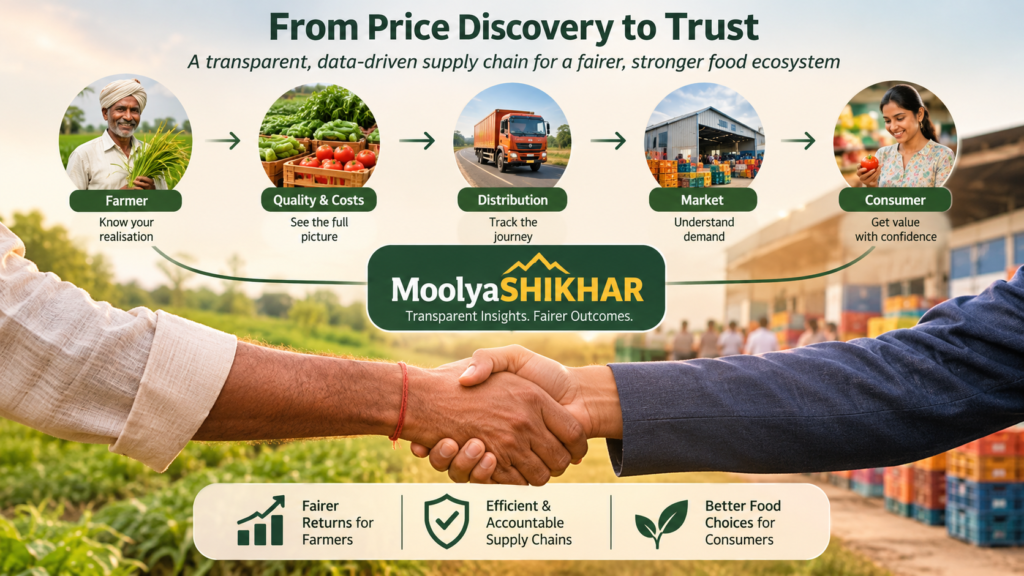
The larger opportunity is to make the food supply chain more transparent and understandable to the people who depend on it.
Farmers should be able to understand the economics of the markets they supply. Buyers should be able to explain the terms on which they procure. Distribution businesses should be accountable for the costs and risks they introduce. Consumers should have greater confidence that the price they pay reflects a credible product and a functioning supply chain, rather than just a marketing claim.
This does not require the removal of intermediaries, nor does transparency mean that every participant must earn the same percentage of the final price. Different activities require different investments, capabilities and levels of risk-bearing. The objective is to make the allocation of costs, risks and value visible, explainable and open to scrutiny.
MoolyaSHIKHAR brings together the economics of production and the realities of the market. By accounting for farmer costs, produce quality, destination-market prices, distribution costs and transaction-level adjustments, it seeks to make the basis of pricing and the allocation of value more transparent.
Cost does not dictate price, and price alone does not determine the farmer’s final realisation. Understanding the relationship between all three is essential to determining whether a transaction works economically.
The ambition is not simply to get farmers more or make consumers pay less. It is to make the economics of food transactions more transparent and truthful, enabling farmers, buyers, distribution businesses and consumers to make better-informed decisions.
That is how price discovery becomes more than a number. It becomes a foundation for informed decisions, transparent transactions and a food supply chain that works better for everyone involved.