Śaila-Shāstra (शैल शास्त्र) - Living Craft Knowledge Stone Masonry & Craftsman Internship

Introduction
Get ready for dusty hands and your heart grounded in the art of stone masonry, one of the oldest and most revered crafts of the Himalayas.
Following the success of Lauhaar Shaastra, our blacksmithing and cultural preservation internship from 2024, Gram Disha Trust now brings to life the next chapter of living craft traditions the Śaila-Shāstra Internship, focused on the ageold stone masonry of Himachal Pradesh.
This is not just an internship; it is a journey into the soul of rural craftsmanship. Participants will live amidst the hills of Pangana valley, in Karsog Tehsil, guided by the rhythmic sounds of chisels striking rock, the warmth of hearth fires, and the timeless wisdom of mountain masons whose hands have shaped temples, homes, and villages for generations.
Civilizational history is presented through the hands of these craftsperson, be it Egypt, Mesopotamia, Greek, Roman or Assyrian – master builders and stone craft has stood the test of time. Alas, the persons who completed these works and their knowledge is all but forgotten.
All visitors to Himachal Pradesh marvel at the temple architecture which abound in various areas of the state. This program is a testament to those hands which built these temples which still stand the test of times. Would you like to know more?
The Legacy of Stone in the Himalayas
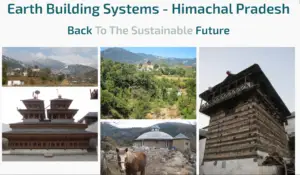
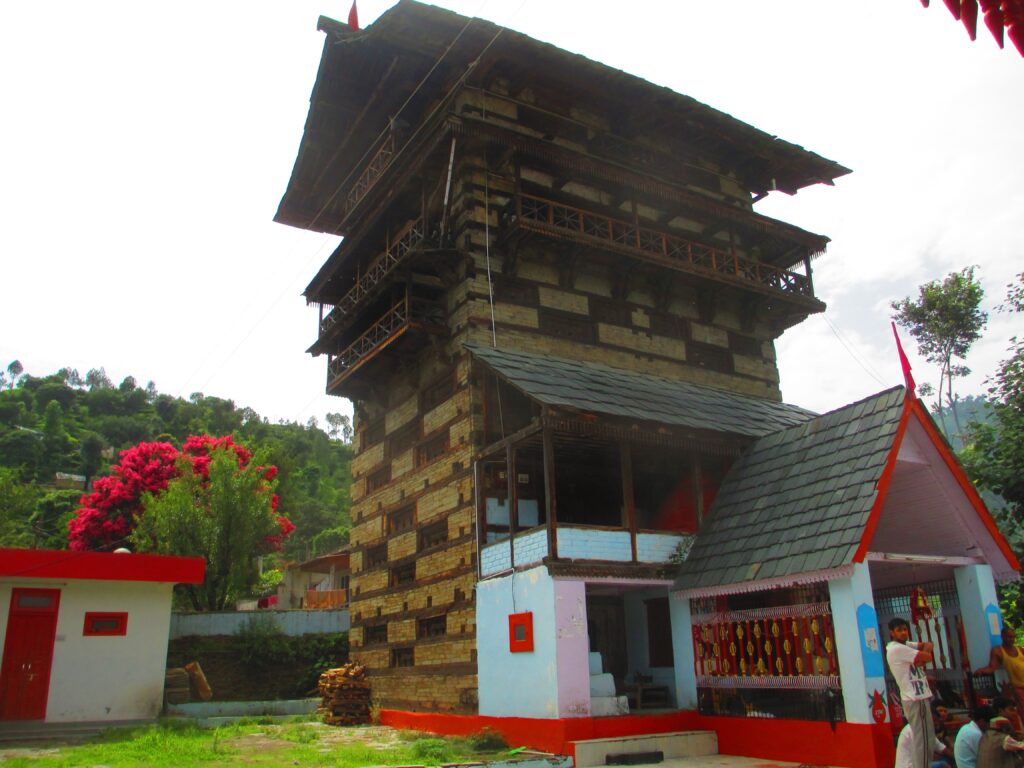
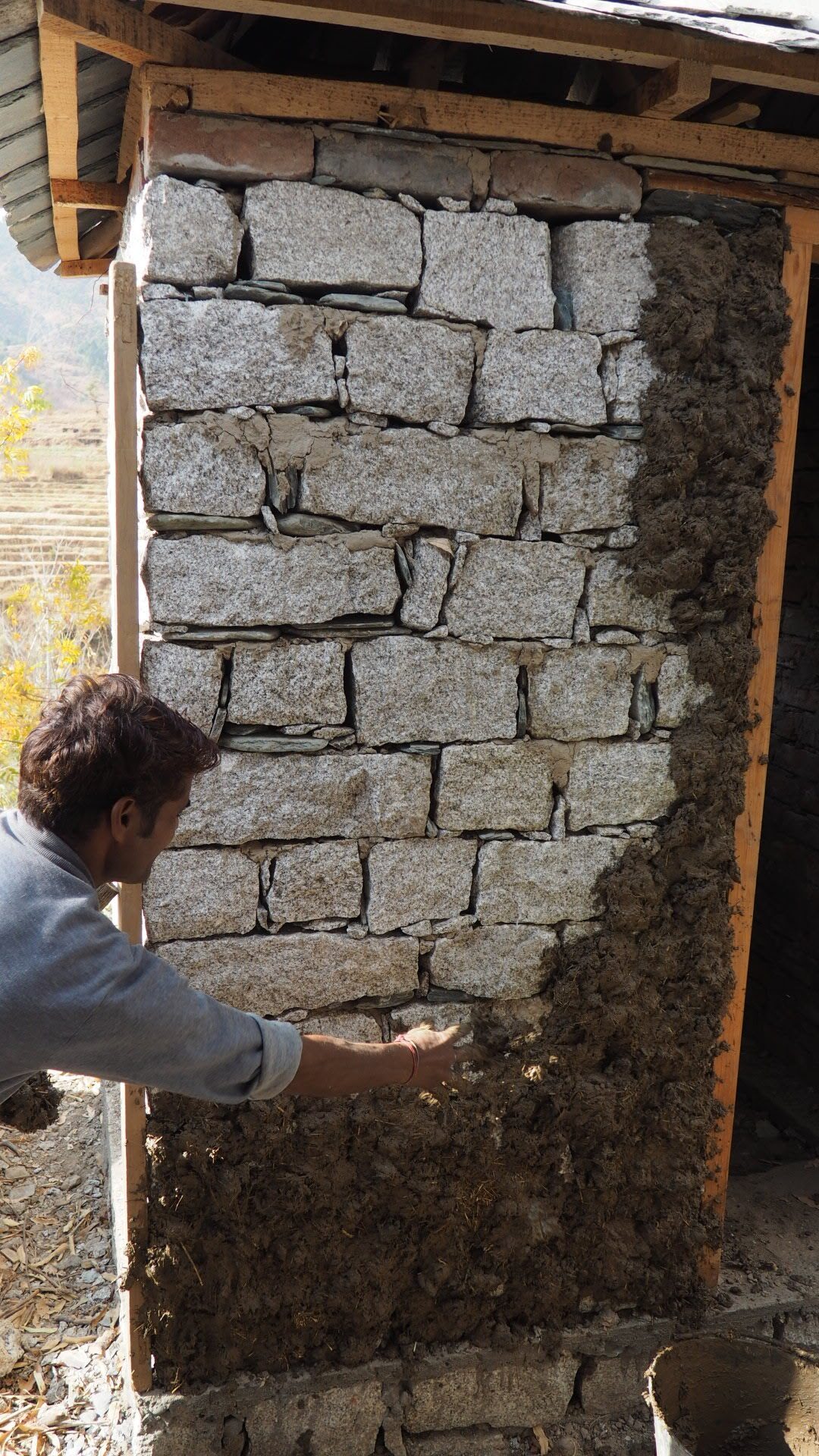
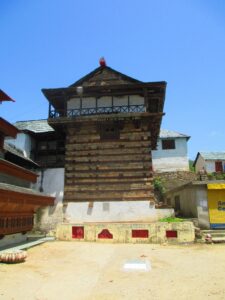
Himachal Pradesh is a land built upon stone quite literally. In the valleys of Pangana, every home, every path, and every temple bears witness to the artistry and perseverance of the Raj Mistris, the master masons of the region. Here, stone is more than a building material; it is a language of endurance and devotion, of balance between utility and beauty. It is in complete harmony with nature since it is highly localised in material and effort thereby as carbon neutral as it gets in todays context. Temples such as Mata Mahamaya in Pangana are magnificent examples of how the people of this region transformed raw rock into structures that have withstood centuries of rain, snow, and seismic tremors.
The thick interlocking walls of these temples, built without cement, tell us that science and spirituality once walked hand in hand. In every chisel mark and every slate laid on a roof, there exists a harmony between human hands and nature’s raw strength. Slate or Stone roofing, or Patthar ki Chhat, remains one of the most iconic sights in the region heavy slabs carefully stacked to shield homes from snow and wind, each one reflecting the greyblue shimmer of the Himalayan sky.
“The ingenious local artisans, therefore, devised way to use this stone for building purpose by combining it with wood.”
— Rameshwar Singh, “Temple Architecture of Western Himalayan Region”
This tradition of working with stone, bamboo, and clay has been passed down through the generations, supported by the Jajmaani system an old rural framework that bound blacksmiths, farmers, and masons in a network of exchange and interdependence. In this web of craft and community, every skill sustains another, and every worker is part of a larger, living ecosystem of creativity.
The importance of stonemasons as craftspersons cannot be underestimated. Everytime one travels on the roads of Himachal Pradesh, it is the stone brace walls which save the travelers from Landslides. Apart from this everyday tools such as Pestle (Okhal), Mortar (Kundi), Millstone (Chakki – Gharat Watermill) are everyday life tools made by the worn out hands of a stonemason. So from being a spiritial Shilpkaar the oft forgetten stone mason is also a carrier of memory of the ages – as old as stone itself.
In this Internship we will rediscover this oft forgetten knowledge ( Vidya ) and apply it in practicable means to visiblise the importance of the most ignored of all crafts of the Himalayas.
The Philosophy of Shail Shaastra
The word Pashaan (पाषाण) in sanskrit means “Stone” and the word Śaila or Shail (शैल) (related to the word Shila/शिला meaning “Rock”) refers to the science or craft of the stone for a craftsman who understands not just the material, but the mountain itself. The concept of Shaastra, as in Lauhaar Shaastra, refers to a living body of knowledge, one that evolves through experience rather than textbooks. Together, Śaila-Shaastra becomes a celebration of the knowledge embedded in practice, the wisdom passed through calloused hands and attentive apprenticeships.
Construction in these mountains is never random. Every stone is laid according to cosmic and environmental principles described in Vastu Shastra. Before the first strike of the chisel, elders consult the Panchang, the traditional Indian almanac, to find the most auspicious muhurat the right celestial moment for laying the Bhadar ki Neev, the foundation stone.
Even today, this balance between material and metaphysical continues to guide the rural craftsman’s rhythm of work.






Co-Creating the Śaila Shaastra Document
Much like Lauhaar Shaastra, this program will culminate in a collective creation of the Śaila Shaastra, a written and visual documentation of stone masonry traditions in the Himalayas. This document will be coauthored by the interns in collaboration with the Gram Disha Trust team and will explore not only the technical aspects of stonework but also the social, spiritual, and environmental dimensions on sustainability surrounding it.
The Shaastra will include narratives about the Jajmaani system, reflections on the lowcarbon techniques used in mountain construction, local materials and oral histories from local craftsmen and women. The intent is to produce not just a technical manual, but a living cultural archive, preserving the idiom of rural architecture for future generations.
The Internship Experience
The Śaila-Shaastra Internship is designed to be immersive and handson, offering participants an authentic experience of the world of stone masonry of the Himalayas.
Duration
The total duration of the program shall be of approximately 3 months with a 7-day hands on residential component planned in April 2026 at the Gram Bhawan in the Pangna Valley of Karsog Tehsil in Himachal Pradesh. The planned timeline for this Internship is between 19.March.2026 to 31.May.2026.
The tentative dates for the residential Component is between 20 April – 05 May 2026. Finalized dates will be communicated with the selected Interns.
Hands-on Activities
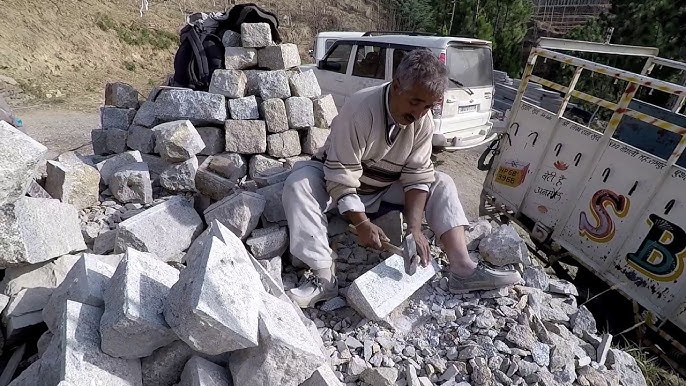
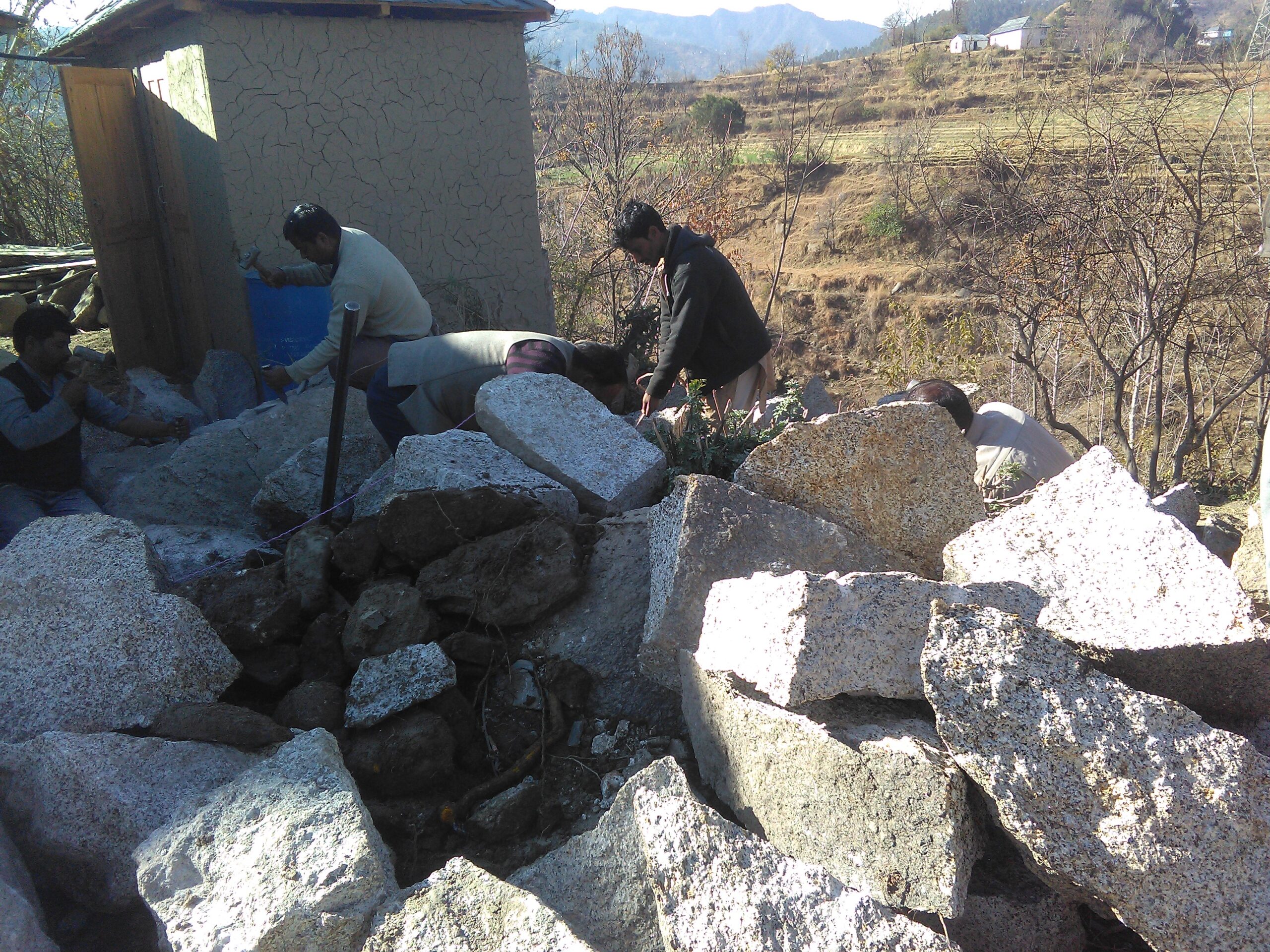
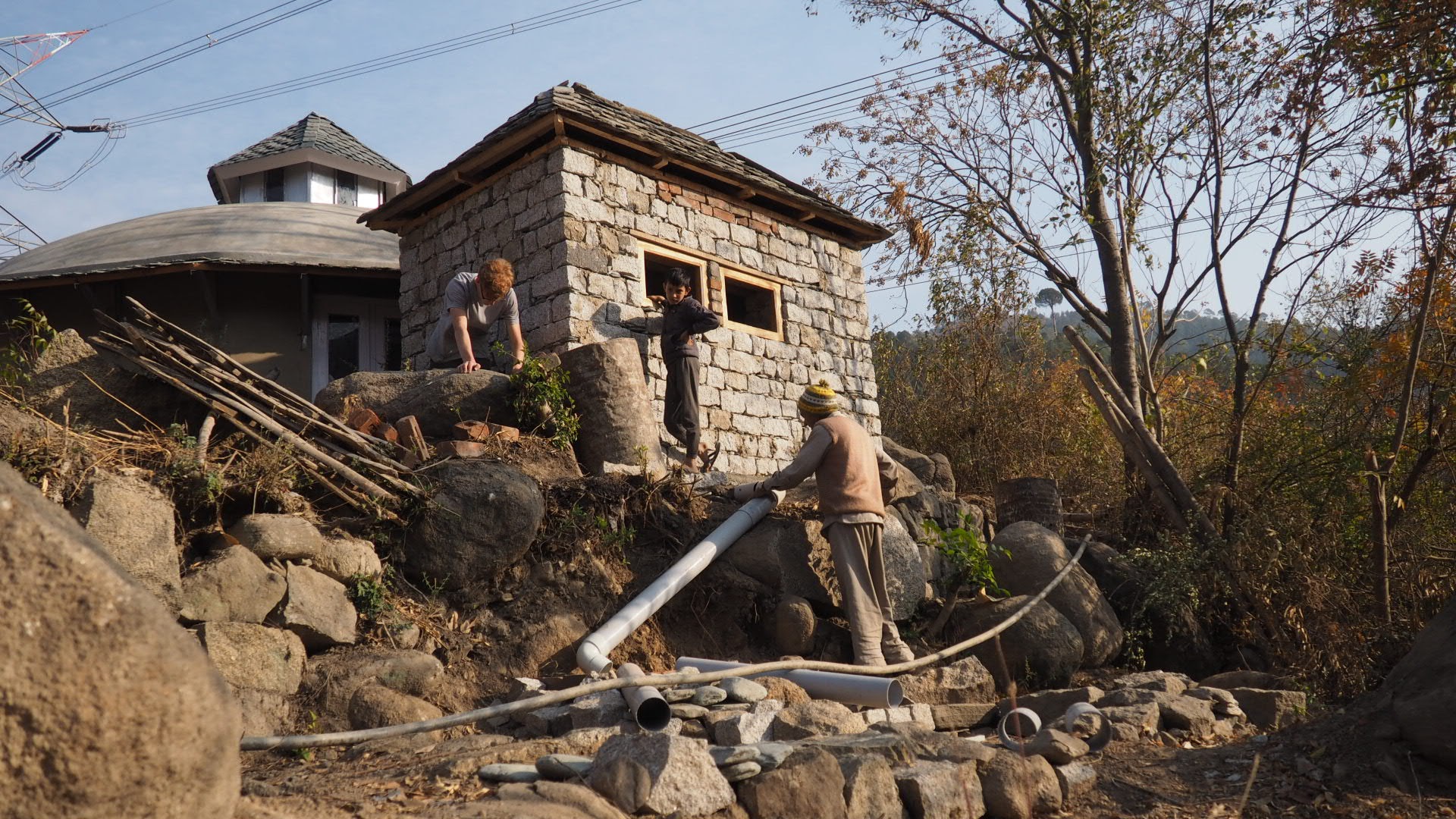
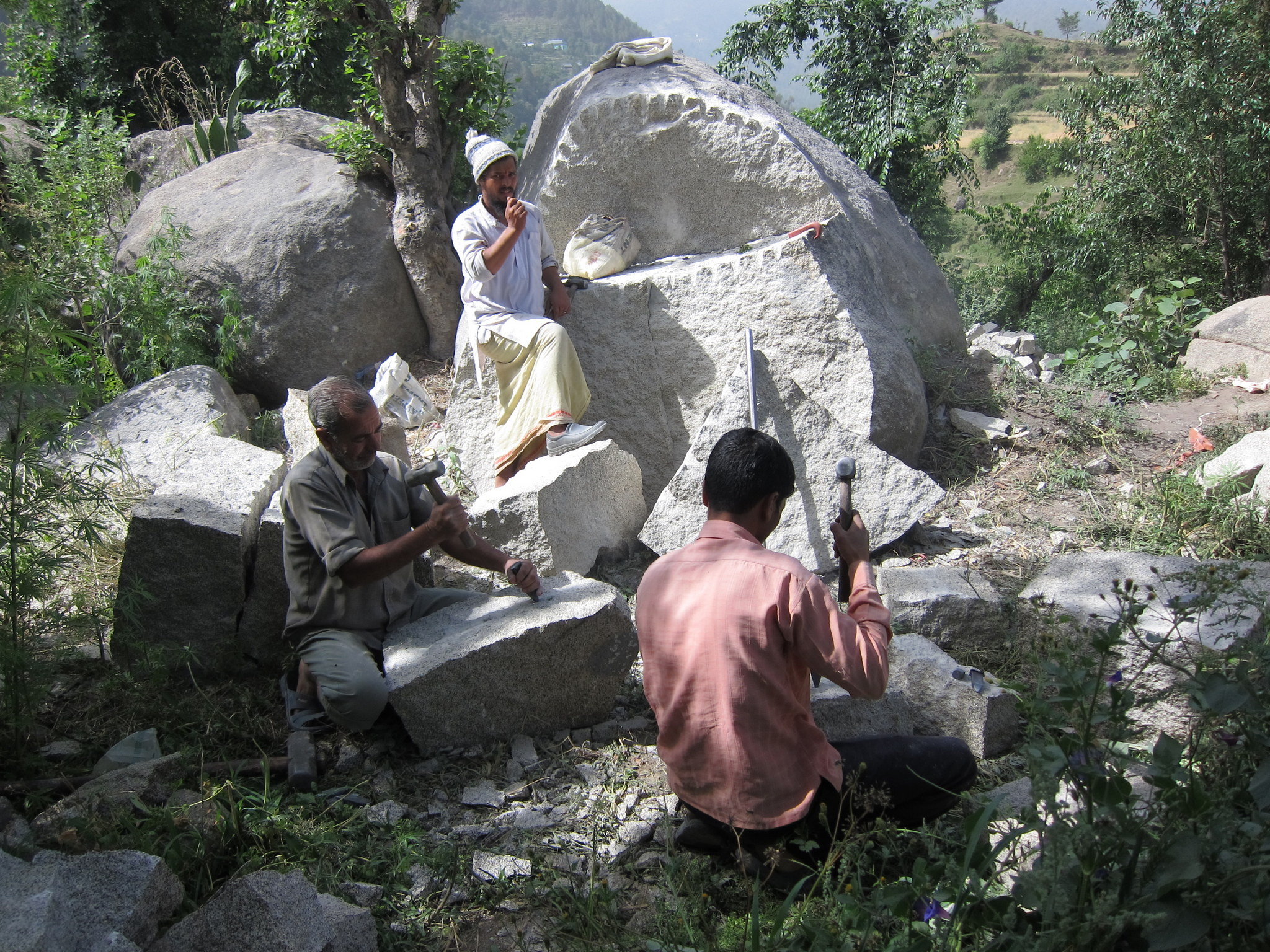
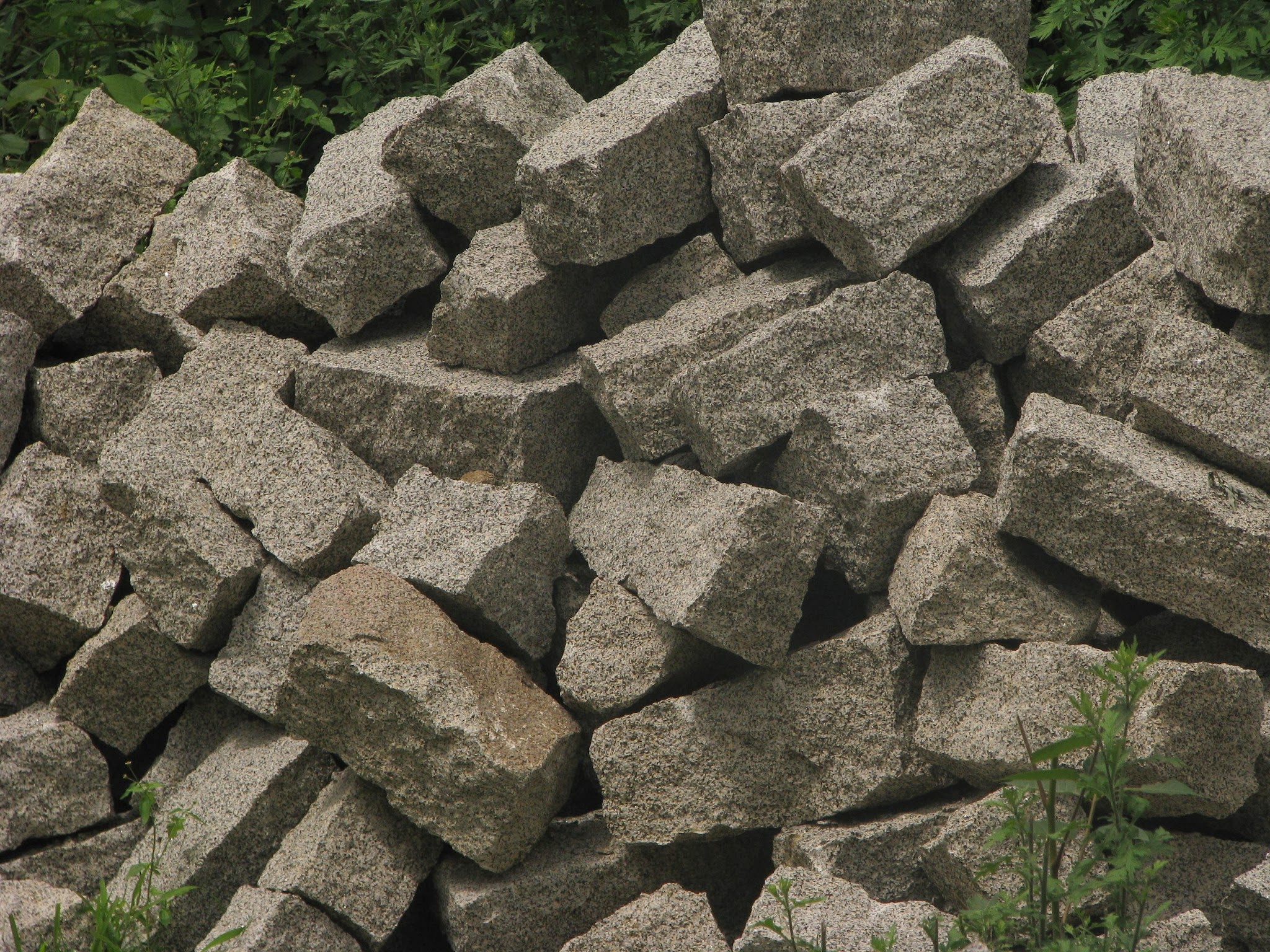
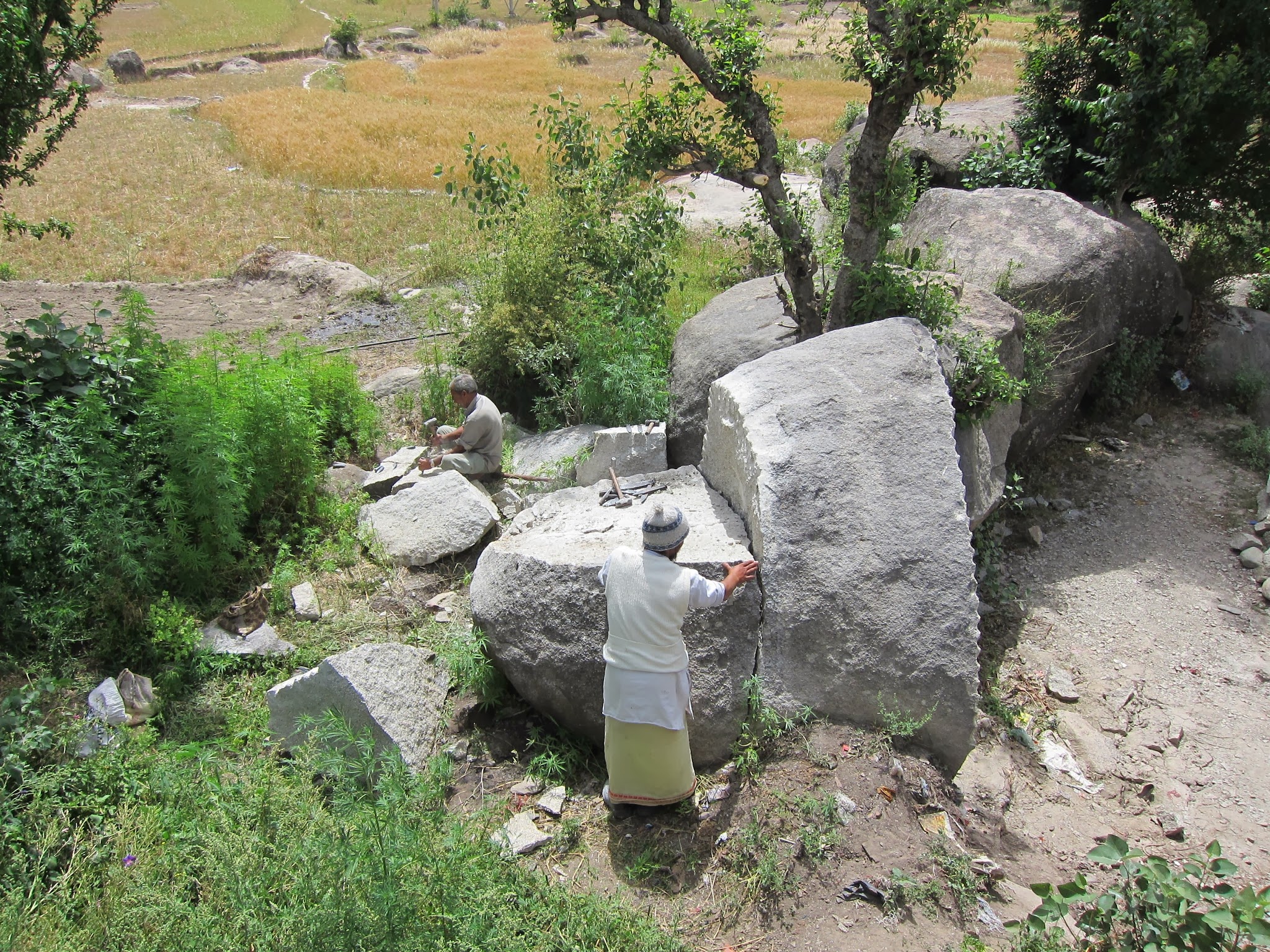
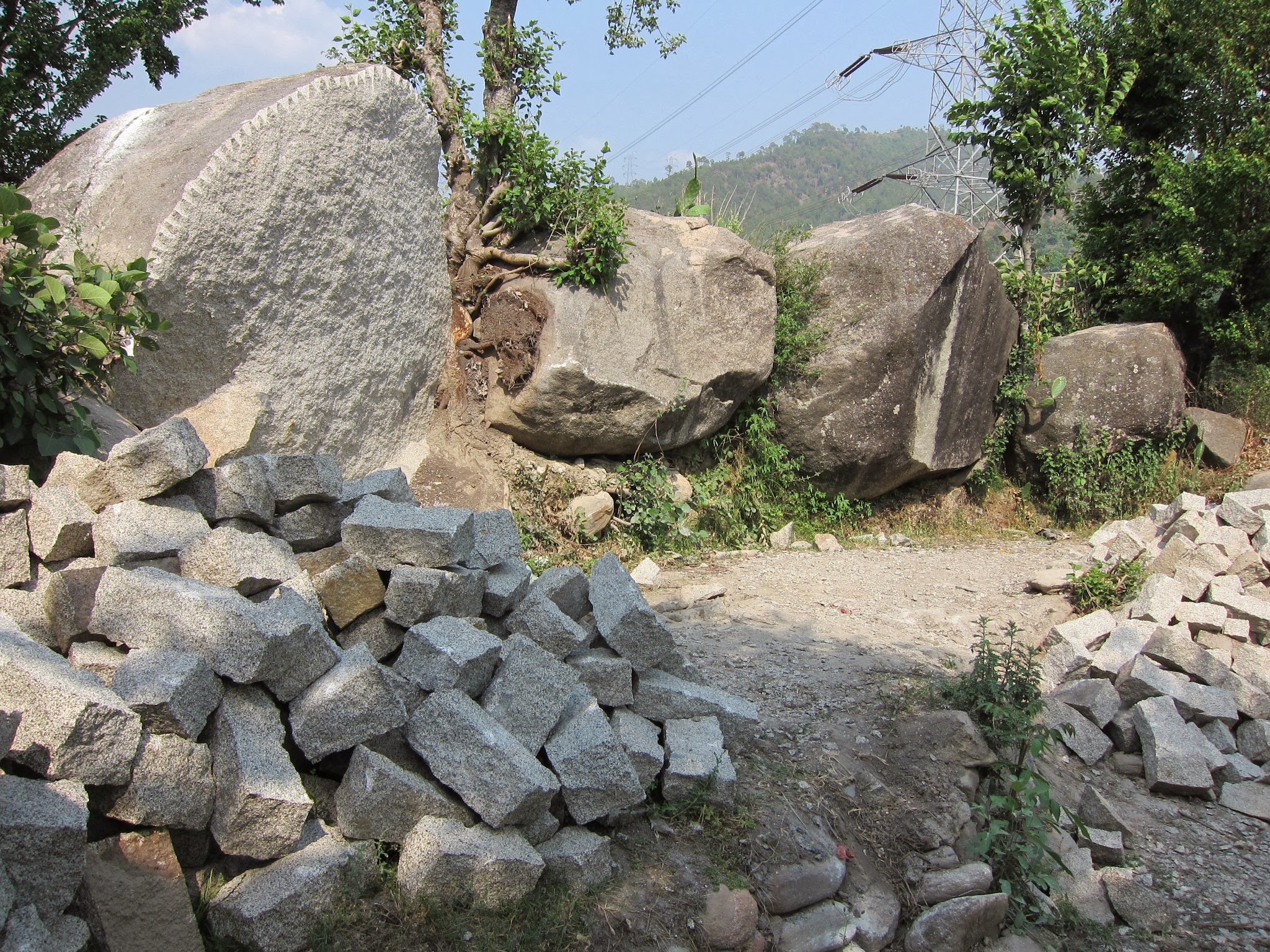
The mornings begin with the sound of metal meeting rock interns will learn to identify different kinds of local stones, their strengths and textures, and how each is suited for specific structural uses. From the smooth slate found near rivers to the coarse granite of the valleys, participants will begin to understand how the land itself decides what the builder must create.
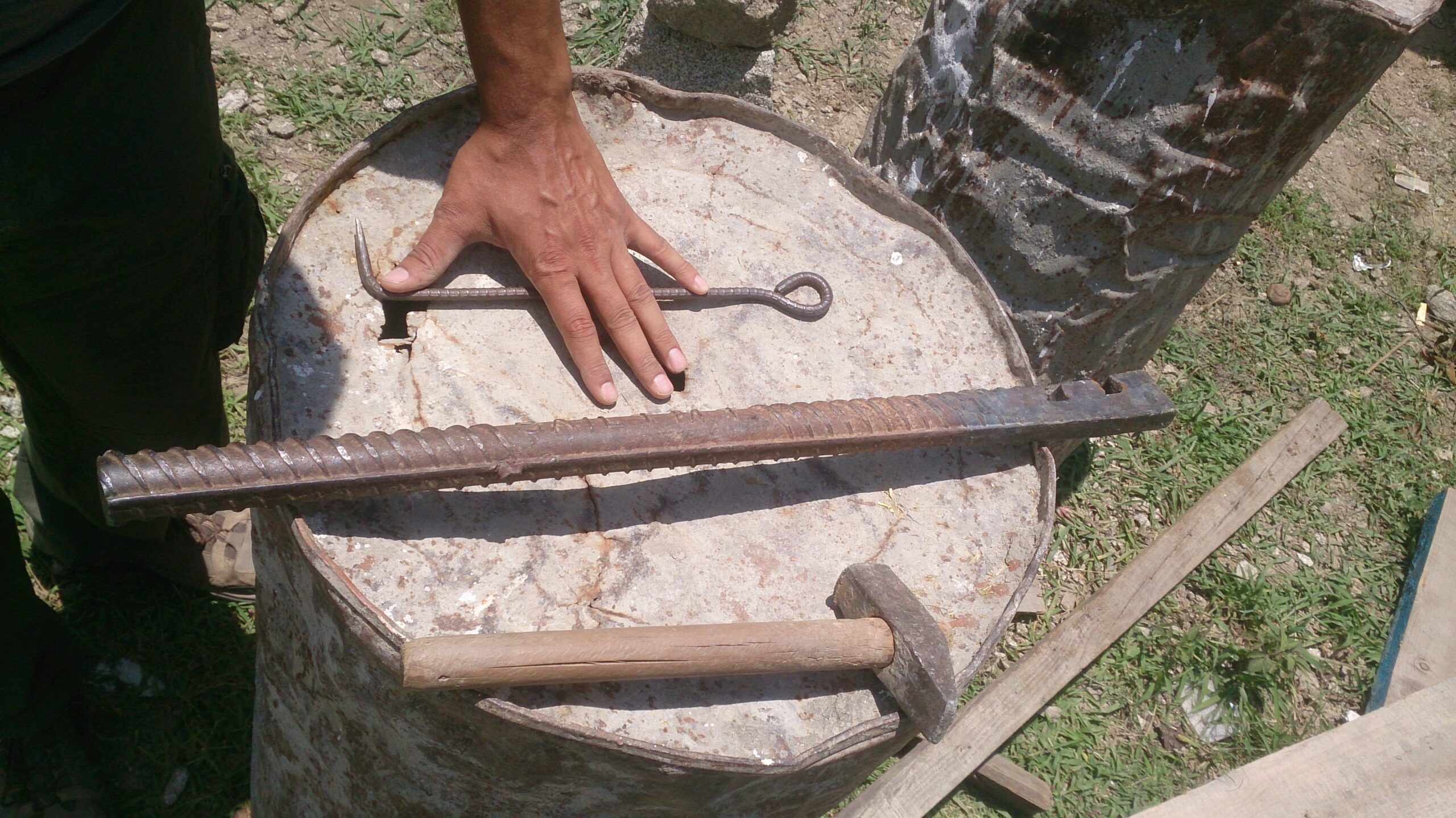
Master masons will demonstrate traditional tools chisels, hammers, measuring rods and reveal the delicate art of cracking and shaping stone. It shall also be a learning exprience from the Blacksmiths or Lauhaar who will setup the foundary to make the tools for the Masons.

Interns will also witness how the stonemasons –
- Identify and choose the Stone Śilā-Parīkṣā (शिला-परीक्षा)
- Collaborate with Blacksmiths to make the tools (कर्मार-उपकरण-निर्माण)
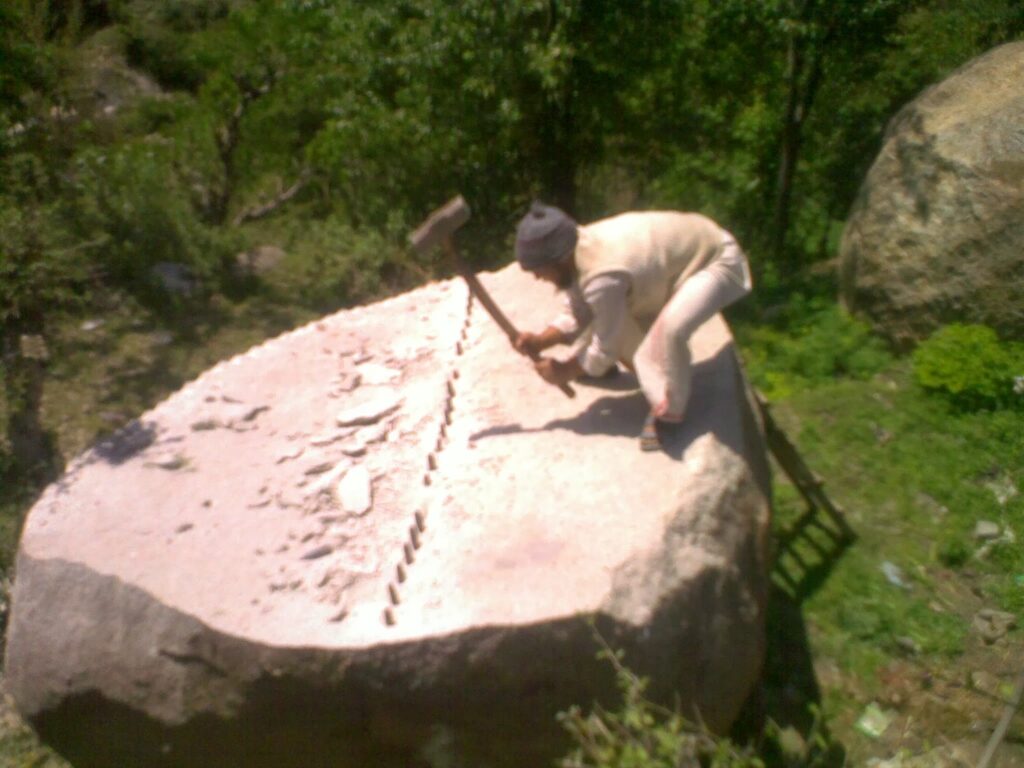
- Splitting Boulders and Rocks of various kinds (शिला तुड़ान)
- Learn the skill of Stone measures, breaking, shaping and dressing (शिला मापन)
- Type of stone unit – Throughstones, Corner stones (शिला लक्षण)
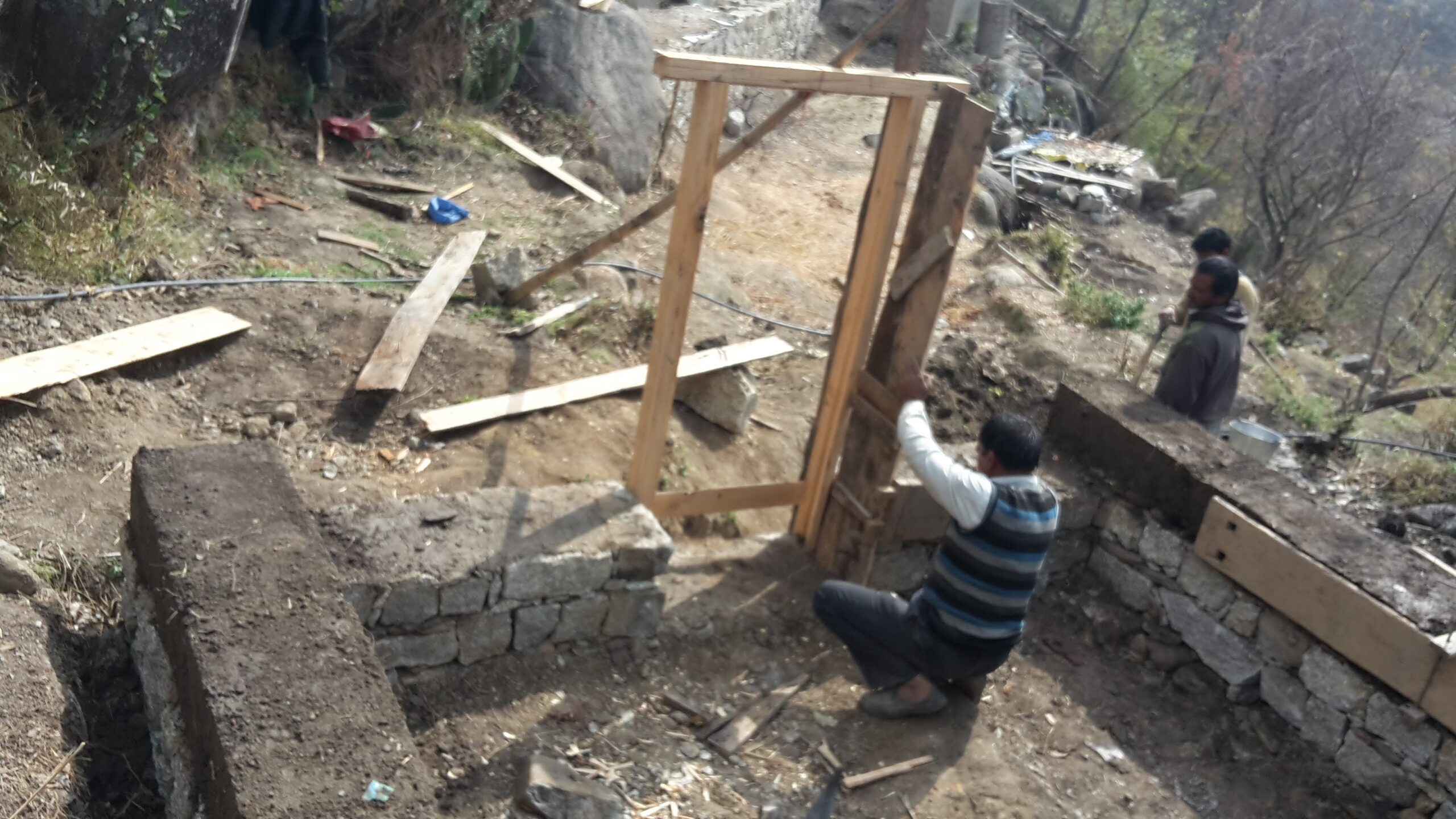
- Hands on work – Coursing and making Bracewall for farmers by masons
Program Timeline
The journey of Shail-Shaastra begins with a 15-day promotion and application phase follows this timeline –
15 Feb 2026 – Applications Open.
15 March 2026 – Applications Close, inviting passionate learners, designers, and cultural practitioners to experience the living knowledge of Himalayan stonecraft.
19 March 2026 onwards – Selected Participants will be notified with confirmation and further Training details.
23 March – 19 April 2026 – Weekly Online Orientation Sessions. Interns will be introduced to the essence of Shaastra Nirmaan the philosophy, structure, and collaborative method of co-authoring the final documentation.
20 April – 05 May 2026 – Handson Residential Component led by local master masons in the Pangna Valley. Participants to reside in/near Gram Bhawan, Village Baag, Pangna Valley, Himachal Pradesh and complete 7-day immersive training, demonstrations and short project. Work assignments for team members for Shaastra development shall be finalised.
05 May 2026 – 31 May 2026 – Weekly updates meeting to complete documentation and finalise the Shail Shaastra for public launch.
The training offers a direct introduction to the pulse of stone masonry from tool preparation and stone selection to chiseling, temple visits, and bamboo integration. Yet the work doesn’t end with the last chisel strike; interns will carry forward the momentum through late December, contributing remotely to the ongoing Shaastra documentation, co-creating narratives, drawings, and reflections. This collaborative archive to be titled Shail Shaastra (शैल शास्त्र) is planned for an official public release and presentation.
Meet the Trainers
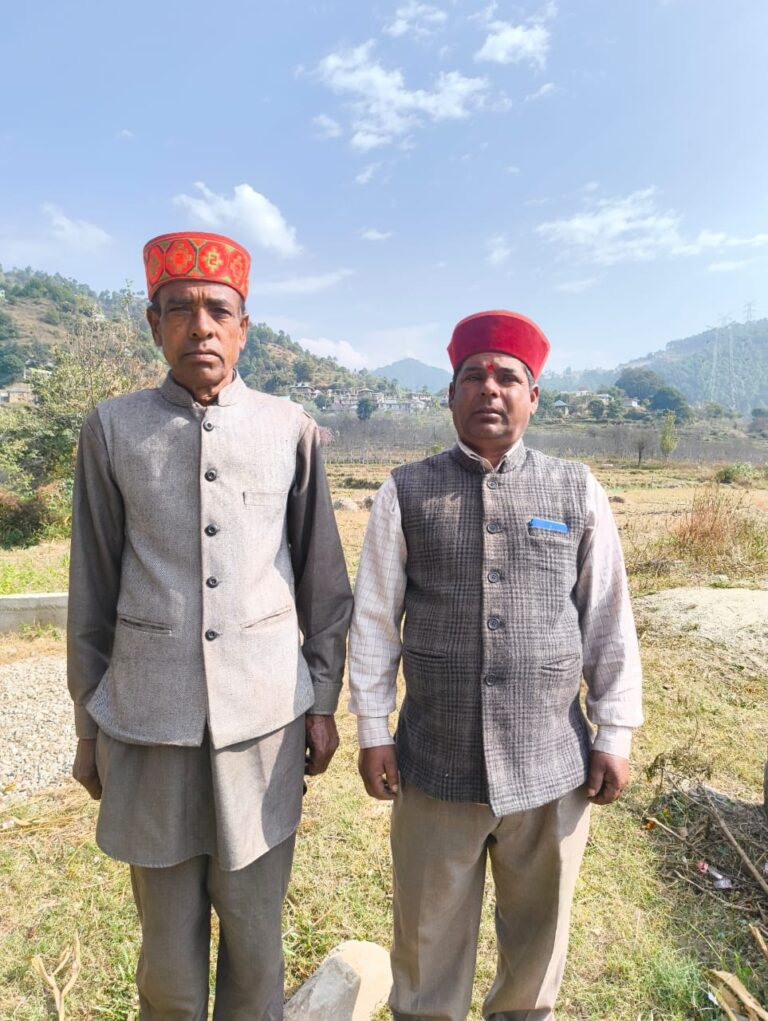
(Right) Sh. Karm Singh, resident of Village Baag, Sub-Tehsil Pangana, Post Office Pangana, District Mandi, Himachal Pradesh, has been working as a stone mason for the past 24 years. His major works include the construction of Purn Mal Mahajan premises and the Electricity Sub-Division Building in Pangana.
(Left) Sh. Kali Ram, resident of Village Dogri, Sub-Tehsil Pangana, Post Office Pangana, District Mandi, Himachal Pradesh, has been practicing stone masonry for 32 years. His notable works include the Medical Office in Pangana and the Agriculture Office in Shana.
Other interactions with stonemasons who work with Slate or Make the Chakki for the Gharaat and everyday utility items shall also be undertaken.
Life in the Pangana Valley: Learning by Living
Interns will stay in simple rural accommodations, surrounded by the slow, earthy rhythm of village life. Meals will be homecooked, rural, vegetarian and wholesome Himachali dishes prepared with local produce and evenings will often end around small fires, sharing stories and songs with villagers.
In this atmosphere, learning becomes personal. Each interaction, each conversation with a mason or farmer, brings alive the deeper meaning of sustainable living one where skill, humility, and nature coexist.
Given the Winters in the Pangna valley the participants are expected to prepare clothing accordingly. Interns and participants should be physically fit to travel and live in the mountains for the course.
Warm Bedding, Blankets and Quilts shall be provided to the interns for the stay.
Smoking and Liquor consumption is prohibited through the course.
Location
Village Baag, Sub-Tehsil Pangna, Himachal Pradesh Quaint, simple and rural accommodation for an authentic experience, living and breathing the vibrant local culture.
How to Reach – Baag, Pangna, Himachal Pradesh
- Option A: 1. The nearest railway stations are New Delhi, Kalka, or Chandigarh.
2. Take an HRTC bus from Kalka, New Delhi, or Chandigarh to Shimla or Churag. / Karsog.
3. Pro tip: There’s a direct bus from New Delhi to Karsog. (Interns should leave the bus at Churag station.) near by pangna
4. From Shimla, there are 3-4 buses to Karsog in day .
5. From Churag, you can take local buses to reach “Baag, Pangana.” - Option B: 1. Take a night HRTC bus route from New Delhi ISBT to Manali.
2. Get off at the Sundarnagar station. The bus arrives in Sundarnagar in the early morning hours. (New Delhi to Sundarnagar distance is approximately 400 km)
3.From Sundarnagar, take a bus to Pangna. It will take around 2 hours to reach Pangna from Sundarnagar. (Sundarnagar to Pangna distance is about 70 km).
Travel plans need careful consideration due to limited bus services from New Delhi and Chandigarh. Check schedules ahead of time and allow for possible delays or changes.
Fees/Donations
The Śaila-Shāstra program is promoted by Gram Disha Trust training costs are supported through a fund-raising effort.
Participants are expected to pay –
- Course Contributions (For Trainers and Arrangements) – 4500 INR/-
- Basic Rural Accomodation – Upto INR 350/- per day (2800/- for 8 days)
- Simple Rural Food Expenses – Upto 375/- per day (3000/- for 8 days)
- Total – 10300/-
Boarding and Lodging (Local Hospitality) is paid to the farmers of the Village Baag and nearby farmstays.
Participants are expected to support with Fund Rasing Effort for this and future courses on voluntary basis.
Donations for the program are also welcome contributing towards the efforts of Gram Disha Trust. Donors are also suitably credited in the Shaastra documentation. For Donations please contribute to –
Bank Account – Gram Disha Trust
Current Account No – 50200074685889
IFSC – HDFC0001347
Please note that we accept only donations in Indian Rupees with the PAN number of the donor. Kindly send us an email at graamdishaa@gmail.com with your details to raise the necessary reciept.
To Pay Online – Click Here.
Participation & Completion
The Śaila-Shāstra Internship will run for a total of seven residential days, with additional documentation work to be continued remotely. Interns who actively participate, complete their fieldwork, and contribute meaningfully to the Shaastra document will receive a Certificate of Completion and a Citation from Gram Disha Trust.
The training costs are partially supported by Gram Disha’s fundraising efforts, and participants are asked to contribute modestly towards the local community that hosts them.
“To carve a stone in these mountains is to leave behind a trace of time, a story that outlives its maker.”
— Gram Disha Trust, 2025
Join us this December, and become part of a living heritage one where the mountains speak through the hands of those who shape them. To know more please contact graamdishaa@gmail.com
Who Should Apply
The program welcomes applicants who are not only interested in learning stone masonry as a skill, but also in understanding its cultural, ecological, and community context. The following profiles are especially encouraged to apply:
Architects and Architecture Students
Students of Communication & Multimedia Design
Craft Designers and Researcher
Anthropologists & Social Science Learners
Civil Engineers & Structural Design Students
Cultural & Heritage Studies Scholars
The internship is open only to Indian citizens and residents, and the medium of instruction will be primarily Hindi, while documentation work will be in English.
Applicants should be willing to work hands on in a rural Himalayan setting, participate in cultural immersion, and contribute to the collaborative creation of the Śaila–Śāstra documentation.

तथा चाष्टविधं कर्म ज्ञेयं स्थपतिना सदा ।
आलेख्यं लेख्यजातं च दारु कर्म चयस्तथा ॥
पाषाणसिद्धहेम्नां च शिल्पं कर्म तथैव च ।
एभिर्गुणैः समायुक्तः स्थपतिर्याति पूज्यताम् ॥
Tathā cāṣṭavidhaṁ karma jñeyaṁ sthapatinā sadā ।
Ālekhyaṁ lekhyajātaṁ ca dāru karma cayastathā ॥
Pāṣāṇasiddhahemnāṁ ca śilpaṁ karma tathaiva ca ।
Ebhirguṇaiḥ samāyuktaḥ sthapatiryāti pūjyatām ॥
Thus, the eight kinds of work must always be known by the Sthapati (Master Builder), (1) Ālekhyam (painting), (2) Lekhyajātam (drawing/drafting), (3) Dārukarmā (woodwork/carpentry), and (4) Caya (stacking/masonry work)
Pāṣāṇa-śilpa (stone craftsmanship/stonemasonry), (6) Siddha-śilpa (metal-working, possibly bronze/copper), (7) Hemna-śilpa (gold/jewelry work), and (8) Karma (general work).
The Sthapati (master mason/architect) endowed with these qualities attains reverence (pūjyatām).
– Samarāṅgaṇa-Sūtradhāra (Chapter 44: Sthapati-lakṣaṇa) – Verses 20–22